

By 2026, data integration tools are no longer a “nice to have.” They are the difference between teams that trust their numbers and teams that argue about them in meetings. As stacks get bigger and buyer journeys get messier, the ability to connect systems cleanly has become a core growth function.
This article looks at the data integration tools that actually show up in real B2B environments today and will still matter in 2026. Not because they are trendy, but because they solve real problems across CRM integration, marketing automation, analytics, and data enrichment.
This is not a theoretical list. These are tools teams use when data quality, speed, and accuracy are non-negotiable.
Why data integration tools matter more now than ever
Most companies already have the tools. CRMs, ad platforms, marketing automation, analytics, enrichment providers. The issue is that none of them talk to each other cleanly.
That gap creates slow reporting, broken automation, duplicate records, and misleading attribution. According to Gartner, poor data quality costs organizations an average of $12.9 million per year. That means integration is no longer an engineering concern. It is a revenue concern.
Modern data integration tools exist to solve one core problem. Making sure every system works from the same version of the truth.
1. Salesforce for CRM-centered integration
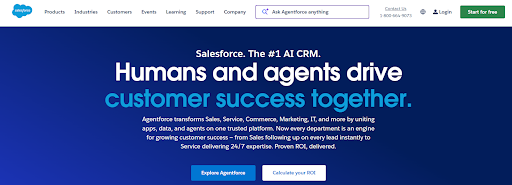
Salesforce remains the backbone for many B2B stacks going into 2026. What keeps it relevant is not the CRM itself, but the ecosystem around it.
Salesforce integrates with almost every serious marketing automation, analytics, and data enrichment provider. For teams focused on CRM integration, Salesforce acts as the central nervous system.
Its native tools and APIs allow data integration tools to push and pull data in near real time. That makes it a strong choice for organizations that want all activity, enrichment, and intent signals to land in one place.
The downside is complexity. Without proper integration discipline, Salesforce can become a graveyard of fields and half-connected objects. The tool works best when paired with clean data inputs and a clear integration strategy.
2. HubSpot for marketing-led data integration

HubSpot continues to dominate among teams where marketing automation drives the stack. Its strength lies in how seamlessly CRM integration, email, ads, and content analytics work together.
For mid-market teams especially, HubSpot simplifies data integration tools by reducing the need for custom connectors. Many integrations are native and fast to deploy.
However, HubSpot’s biggest strength can also be its limitation. It works best inside its own ecosystem. As stacks grow more complex, teams often need external data enrichment or advanced analytics that require additional integration layers.
3. TAMI for live market and contact data integration
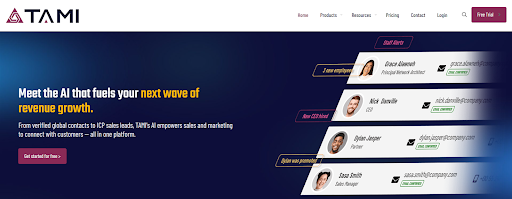
This is where TAMI fits naturally into modern data integration tools.
Teams use TAMI when CRM integration and marketing automation suffer from outdated or incomplete data. We provide live market and contact data that plugs directly into CRMs and automation tools.
Instead of enriching records once, TAMI keeps them current. That changes how automation behaves, how leads are prioritized, and how outreach is timed.
In practice, this reduces noise and increases confidence. Marketing automation fires based on real-world changes. Sales sees fewer dead leads. Analytics reflect actual market movement.
We most often see TAMI used alongside existing CRMs and automation platforms, not as a replacement, but as a data integrity layer.
4. Zapier for lightweight automation and integration

Zapier remains relevant because it solves simple problems fast.
When teams need quick CRM integration or marketing automation connections without engineering resources, Zapier fills the gap.
It works best for operational workflows rather than deep data architecture. Think lead routing, notifications, and simple updates between tools.
As data volumes grow, Zapier shows its limits. It is not designed for complex data enrichment or large-scale synchronization. Still, for tactical integrations, it remains a staple.
5. Workato for enterprise-grade integration
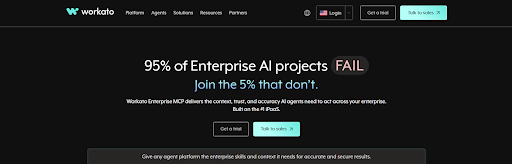
Workato sits at the opposite end of the spectrum from Zapier. It is built for scale, governance, and complex logic.
Enterprise teams use Workato to manage CRM integration across dozens of systems while maintaining control and compliance. It handles sophisticated workflows, error handling, and transformation.
For organizations serious about data integration tools at scale, Workato offers power and reliability. The tradeoff is setup effort and cost. This is not a plug-and-play solution.
6. Snowflake as a data foundation
Snowflake is not an integration tool in the traditional sense, but it has become central to modern data stacks. Many data integration tools now revolve around feeding Snowflake.
It acts as a centralized warehouse where CRM, marketing automation, product, and financial data converge. From there, analytics and AI tools can operate on a unified dataset.
Snowflake’s role in 2026 will continue to grow as AI-driven insights demand clean, accessible data at scale.
7. Looker and modern BI platforms
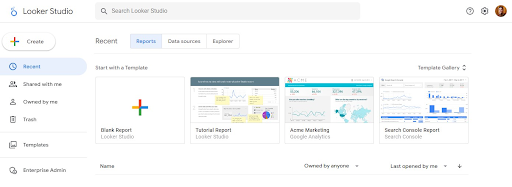
Looker and similar analytics platforms turn integrated data into decisions. They rely entirely on the quality of upstream data integration tools.
When CRM integration and marketing automation data flow cleanly into a warehouse, BI tools surface patterns that teams can act on quickly. Pipeline velocity, channel performance, lead quality trends.
Without proper integration, analytics tools simply visualize confusion faster.
8. OpenAI-powered integration layers
AI-driven integration is still early, but it is moving fast. Tools that use OpenAI to normalize, deduplicate, and interpret data across systems are becoming part of the stack.
By 2026, AI will not replace data integration tools, but it will sit on top of them. Turning connected data into predictions, prioritization, and recommendations.
The quality of those outputs depends entirely on the quality of the integrated data underneath.
How to choose the right data integration tools
The best data integration tools are the ones that match your data maturity.
If your CRM integration is messy, start there. If marketing automation is firing blind, fix your inputs. If analytics feel disconnected from reality, audit your pipelines.
High-performing teams choose fewer tools and integrate them better. They invest in data enrichment and freshness before adding complexity.
According to McKinsey, data-driven organizations are 23% more likely to acquire customers and 19% more likely to be profitable. Integration is the foundation of that advantage.
Final thoughts
Data integration tools in 2026 are not about syncing systems. They are about creating trust in decisions.
When CRM integration, marketing automation, analytics, and data enrichment work together, teams move faster and argue less. Growth becomes deliberate instead of accidental.
The tools listed here matter because they solve real problems teams face every day. The difference is not the software. It is how well the data flows.
If your CRM and automation tools feel disconnected from reality, it is time to fix the data layer. See how live data integration and continuous enrichment can sharpen your entire stack. Book a demo now and stop guessing.