
B2B Digital Marketing That Actually Works: 6 Lessons from Top Dogs
20/01/2026
CASE STUDY: How iwocaPay Replaced Three Tools with TAMI AI
02/02/2026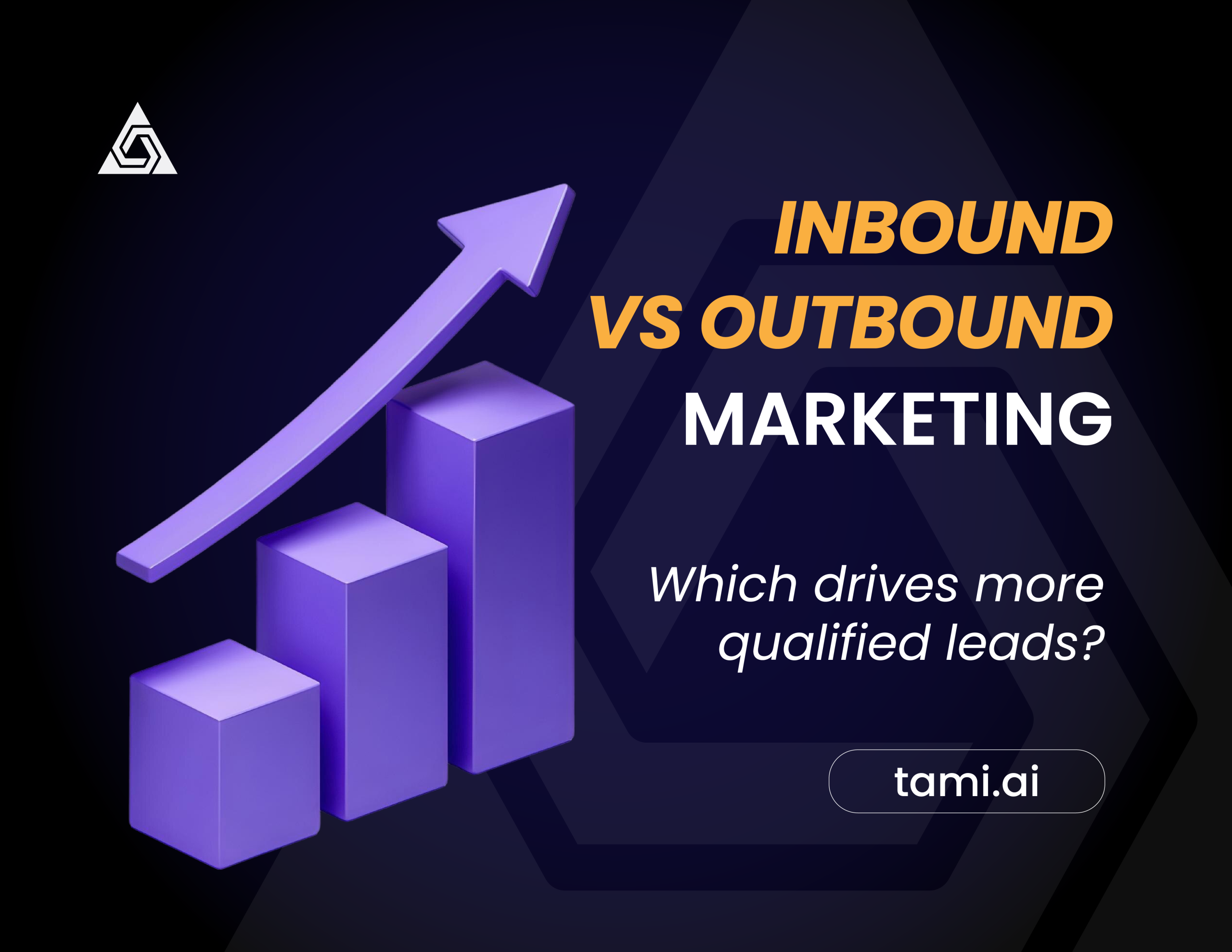
Ask ten B2B leaders about inbound vs outbound marketing, and you will hear ten confident opinions, most of them shaped by whatever worked last quarter. The problem is that this debate is usually framed the wrong way.
It is treated like a binary choice when in reality the difference shows up in lead quality, timing, and how much control you actually have over growth.
Teams that win at B2B lead generation do not argue about inbound vs outbound marketing in theory. They look at what produces qualified leads they can close, consistently, without burning time or trust.
Let’s talk about how this actually plays out in the real world.
Why the inbound vs outbound marketing debate never really goes away
Inbound marketing earned its reputation for a reason. Content, SEO, and demand capture scale well over time. When it works, it feels efficient. Leads arrive warmed up. Sales conversations start later in the buying journey.
Outbound marketing, on the other hand, gets criticized because most teams do it badly. Poor targeting, weak data, lazy messaging. The result is predictable. Low response rates and angry prospects.
So the inbound vs outbound marketing debate often turns into a moral argument instead of a performance one. That is a mistake.
According to HubSpot’s State of Marketing report, inbound strategies tend to generate leads at a lower cost over time, while outbound methods still play a major role in early-stage pipeline creation for B2B teams. Both facts are true at the same time.
The real question is not which one is better. The question is which one produces qualified leads when you need them.
What inbound marketing actually delivers in practice
Inbound marketing shines when your buyers already know they have a problem and are actively researching solutions. In those moments, strong content and SEO make you visible and credible.
In the inbound vs outbound marketing comparison, inbound tends to produce leads that are more informed. They have read your materials. They understand your positioning. They usually ask better questions.
However, inbound marketing has two limitations that rarely get discussed honestly.
First, timing is out of your control. You wait for demand to exist. If the market slows or competitors outrank you, pipeline slows with it.
Second, inbound leads often represent only a slice of your actual addressable market. You capture demand, but you do not create it.
This is where many B2B lead generation programs stall. Traffic grows. Leads grow. Revenue plateaus.
Where outbound marketing gets misunderstood
Outbound marketing fails when it is treated like a volume game. Blast enough messages and hope someone bites. That approach deserves its bad reputation.
But modern outbound, when done correctly, looks very different.
In the inbound vs outbound marketing discussion, outbound wins on control. You decide who to target, when to engage, and what signal matters. That makes it powerful for B2B lead generation when timing matters.
The key difference is data-driven outreach.
When outbound is built on accurate, current data, it stops feeling intrusive. Messaging becomes relevant because it is triggered by real-world signals. Job changes. Technology adoption. Market expansion. Competitive shifts.
Gartner research shows that buyers are far more receptive to outreach that reflects their current business context. Relevance, not channel, is what determines response.
This is also where marketing automation either helps or hurts.

Marketing automation amplifies whatever strategy you choose
Marketing automation does not fix broken inbound or outbound strategies. It makes them louder.
In inbound marketing, automation helps nurture leads at scale, personalize content delivery, and maintain consistency. That is valuable when the right people are already in your funnel.
In outbound marketing, automation supports timing and orchestration. It ensures outreach happens when intent signals appear, not weeks later when the moment has passed.
The inbound vs outbound marketing debate often ignores this. Automation is not a strategy. It is an amplifier.
Teams that struggle usually automate too early. They build sequences before they understand what signals actually correlate with qualified leads.
Teams that succeed use automation after they have clarity. They know what a real buying signal looks like because they track it across customer acquisition data and closed deals.
Qualified leads are a data problem before they are a channel problem
Here is the uncomfortable truth most teams avoid.
If your leads are not qualified, your data is lying to you.
In both inbound and outbound marketing, lead quality depends on how accurately you understand intent. Forms do not equal readiness. Website visits do not equal buying power. Email replies do not equal budget.
High-performing teams anchor their B2B lead generation strategy in data that reflects behavior, not just interest.
This is where data-driven outreach changes the equation.
When teams use live market and contact data, they stop guessing. They see which companies are actively changing vendors, scaling teams, or investing in new infrastructure. That context turns both inbound and outbound into smarter plays.
This is where our platform fits naturally into the conversation. We support teams that already run inbound and outbound programs, but want them to produce better leads. By keeping customer acquisition data current and actionable, marketing automation fires based on reality, not assumptions.
Inbound vs outbound marketing works best when they stop competing
The most effective teams stop treating inbound vs outbound marketing as opposing camps.
Inbound educates and captures demand. Outbound creates focus and urgency. Together, they reinforce each other.
Outbound insights inform inbound content. Inbound engagement warms outbound conversations. Data flows both ways.
McKinsey has repeatedly highlighted that B2B buyers engage across multiple channels before making decisions. Teams that align inbound and outbound around shared data outperform those who isolate them.
The difference is coordination, not budget.
So, which drives more qualified leads?
If you want the honest answer, it depends on your data maturity.
Inbound marketing tends to produce more qualified leads when your market is actively searching, and your content speaks directly to buying concerns.
Outbound marketing produces more qualified leads when your targeting is precise, and your outreach is driven by real intent signals.
Most teams fail because they try to scale one while ignoring the other, or worse, they scale both on bad data.
The winners invest in clarity first. Who are we targeting right now? Why now? What changed for them? Then they decide which channel activates that insight best.
Final thoughts
The inbound vs outbound marketing debate is outdated. Buyers do not care which path brought you into their world. They care whether you understand their situation and respect their time.
If you want inbound and outbound to produce leads your sales team actually wants, start with better customer acquisition data. See how data-driven outreach and smarter automation can sharpen your B2B lead generation today.
Book a demo now before another quarter slips by.