
Why B2B Data Enrichment Is the Secret Weapon for Sales Teams
31/03/2026
TAMI vs HubSpot Chrome Extension: Which Is More Accurate?
31/03/2026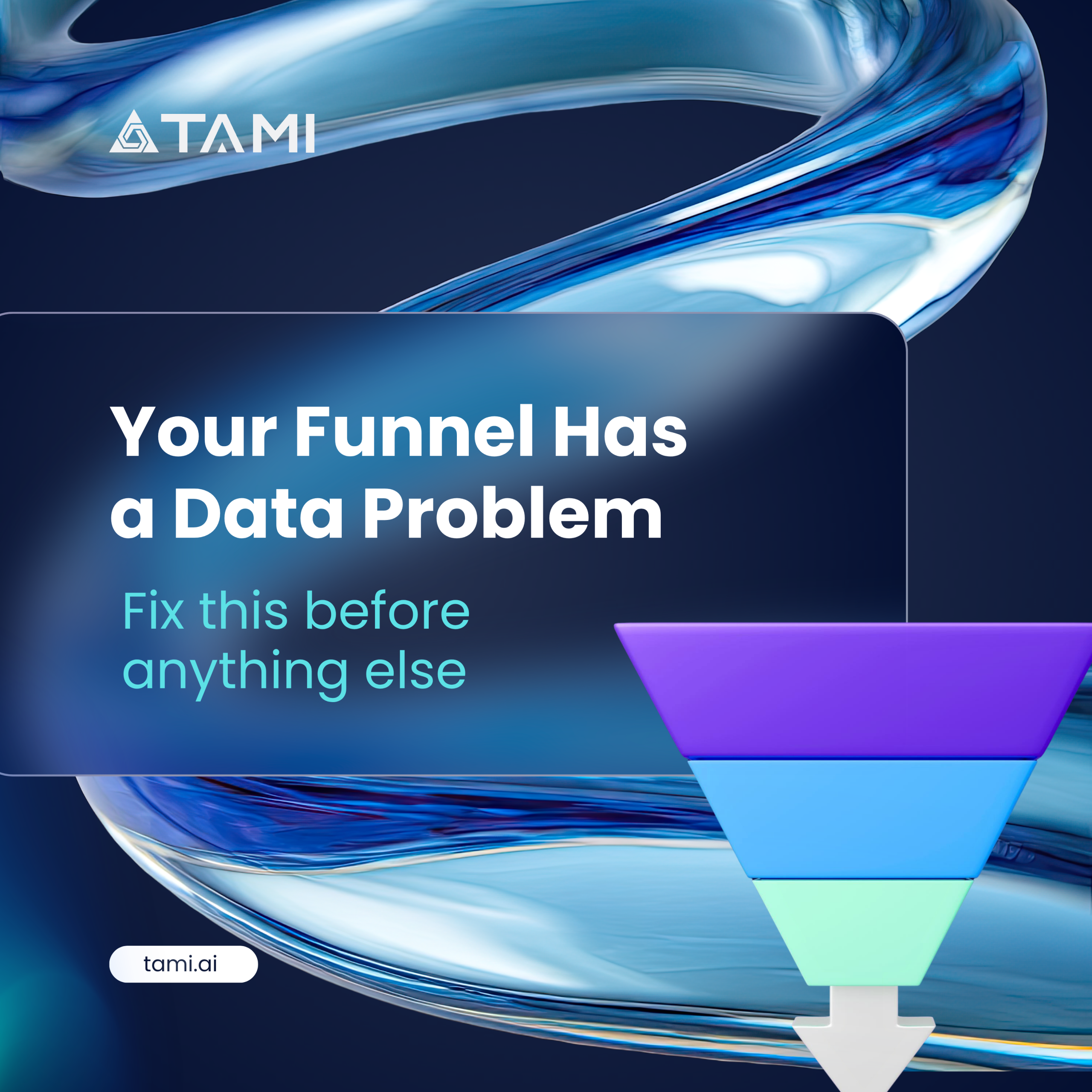
Sales funnel optimization is usually treated like a messaging problem.
Teams tweak email copy, redesign landing pages, or add more steps to their lead nurturing strategy. But most funnels don’t fail because of poor messaging. They fail because the data feeding the funnel is broken.
If your inputs are wrong, your funnel will leak. And no amount of optimization on top will fix it.
The fastest way to improve your sales funnel optimization is to fix what’s happening underneath. That means your data, your CRM structure, and how you’re actually tracking movement through your B2B sales process.
Where most sales funnels actually break
Let’s be honest. Most funnels look fine in dashboards.
You’ve got leads coming in. You’ve got stages defined. You’ve got some level of reporting.
But when you look closer, things start to fall apart.
Leads sit too long without follow-up. Deals stall without clear reasons. Conversion rates drop between stages with no explanation.
This is not a funnel problem. It’s a visibility problem.
According to Salesforce, sales reps spend a significant portion of their time dealing with CRM-related tasks instead of selling. That usually means they don’t trust the data, so they double-check everything.
Now your funnel slows down. Not because of strategy, but because of friction.
Before you fix conversion rates, you need to fix what’s entering your funnel.
Most companies are pushing incomplete or outdated leads into their CRM. That creates issues immediately:
- Leads are assigned to the wrong reps
- Contact details are missing or incorrect
- Decision-makers are misidentified
- Segmentation becomes unreliable
At that point, your lead nurturing strategy is already compromised.
You can’t personalize outreach if you don’t know who you’re talking to. You can’t qualify leads properly if your CRM data insights are incomplete.
This is where companies start to see the value of enrichment.
TAMI, for example, doesn’t just provide contacts. It enriches them with real-time updates, validates emails, and fills in missing data directly inside your CRM.
That changes the quality of everything entering your funnel.
The silent killer: poor CRM data insights
A lot of teams think they have data. What they actually have is noise.
You might have thousands of records, but if job titles are outdated, companies are misclassified, or contacts have moved roles, then your CRM data insights are misleading.
This affects how you prioritize accounts, how you route leads, and how you forecast revenue.
Poor data quality leads to flawed decision-making. In a sales context, that shows up as wasted effort and missed deals.
Sales funnel optimization depends on accurate insights. Without them, you are optimizing blindly.
How leaks actually happen in a B2B sales process
Let’s map this to a real B2B sales process.
Top of funnel
Leads come in, but they’re not properly enriched.
Result: wrong ICP, low-quality conversations.
Mid funnel
Reps try to nurture leads, but data is incomplete.
Result: generic outreach, low engagement.
Bottom of funnel
Deals stall because the actual decision-maker was never engaged.
Result: long cycles or lost deals.
This is what most “leaky funnels” look like. It’s not dramatic. It’s just inefficient.
What changes when you fix the data layer
When you improve your data, your sales funnel optimization becomes much simpler. Now:
- Leads are correctly matched to your ICP
- Contact data is accurate and verified
- Reps know who they’re speaking to
- Outreach becomes more relevant
That creates a very different flow through the funnel.
Instead of trying to push deals forward, you remove the friction that was holding them back.
One of the clearest examples of this comes from TAMI’s case study on a MarTech Company, where enriched and validated data led to a 10X improvement in inbound lead conversion compared to other providers.
That’s not because of better emails. That’s because the right people were being targeted in the first place.
Why lead nurturing strategy depends on data quality
Most lead nurturing strategies fail quietly.
You set up sequences. You define touchpoints. You automate follow-ups.
But if the data behind those workflows is weak, the entire system underperforms.
You end up sending irrelevant messages, targeting the wrong personas, or following up with inactive contacts.

This is why many teams feel like their nurturing “should work” but doesn’t.
When your data is accurate, your lead nurturing strategy becomes much more effective. You can segment properly, personalize outreach, and time your follow-ups based on real signals.
TAMI supports this by providing real-time alerts when contacts change roles or companies, which allows teams to adjust their outreach at the right moment.
That’s the difference between static automation and adaptive outreach.
Modern sales funnel optimization is continuous, not one-time
A common mistake is treating sales funnel optimization as a project.
You audit the funnel, fix a few things, and move on.
But data changes constantly. Which means your funnel is always shifting. That’s why modern teams treat optimization as ongoing. They:
- Continuously enrich CRM data
- Monitor funnel performance in real time
- Adjust targeting based on updated insights
- Clean and maintain data quality
This is where most companies fall behind. They optimize once. Then their data decays again.
TAMI addresses this by continuously refreshing CRM data, validating contact information, and flagging outdated leads so they can be removed.
That keeps the funnel stable over time.
Why this creates a real competitive advantage
Most companies are still operating with outdated CRM data.
That means they are slower to identify opportunities and their funnel leaks more than they realize.
If your data is better, everything else compounds. At that point, sales funnel optimization becomes less about fixing problems and more about scaling what already works.
Final thoughts
If your funnel is underperforming, don’t start by rewriting emails or adding more steps.
Start with your data.
Sales funnel optimization works best when your inputs are clean, your CRM data insights are reliable, and your B2B sales process is supported by accurate information. Fix that layer, and the rest of your funnel starts to behave the way it should.
If you want to see where your funnel is leaking and how better data can fix it, book a demo with TAMI and get a clear view of what’s really happening inside your pipeline.