
Technographic data that goes past the tech stack
Most technographic data tells you which analytics tag and CMS a company runs. TAMI AI reads the commercial stack as well: who processes their payments, which carrier ships their orders, whether they offer BNPL, and who to call inside the business.
We crawl live company websites continuously and classify what each business runs, sells and ships. The output is a filterable record with the technology, the payment infrastructure, the firmographics and the verified contacts in one place.
71m company records. Full stack plus payments and carriers. Re-read continuously.
No card needed. Run a technology query and see what comes back.
A detected technology is a fact. A detected buying window is a lead.
Knowing a company runs a platform tells you it fits your ICP. Knowing it changed platform last quarter tells you the adjacent vendors are in play right now. One is a filter, the other is a reason to call this week.

What is technographic data?
Technographic data describes the technology a company uses: its ecommerce platform, martech, analytics, hosting, CRM and the rest of its stack. Where firmographics tell you a company's shape and demographics tell you about people, technographics tell you how a business actually operates.
Its value in B2B is qualification. A company running the platform you integrate with is a different prospect from one running a competitor's, and both are different from one running nothing at all. The limitation of most technographic data is that it stops at the technical stack.
The commercial stack, meaning payment providers, checkout methods, BNPL and shipping carriers, is where the buying signals usually sit.
Why technographic data disappoints in practice
Three failures, and only the first is widely discussed.
False positives from leftover code
A dormant script, an abandoned trial or a tag nobody removed all register as an active install. Filter on that and your list contains companies that stopped using the product years ago.
Detection without context
Knowing a technology is present tells you nothing about company size, region, trading status or who to contact. A stack list is not a target list.
A snapshot, not a signal
Presence is static. Change is what creates opportunity, and a dataset that cannot tell you a company migrated last month misses the only moment that mattered.
Detection is the entry fee. TAMI AI adds the commercial stack, the firmographics, the change history, and the contacts, so a technology filter returns something you can act on.
THE COMMERCIAL STACK IS THE ONE THAT BUYS
Analytics tags rarely trigger a purchase. Payment providers, carriers, and checkout changes do.
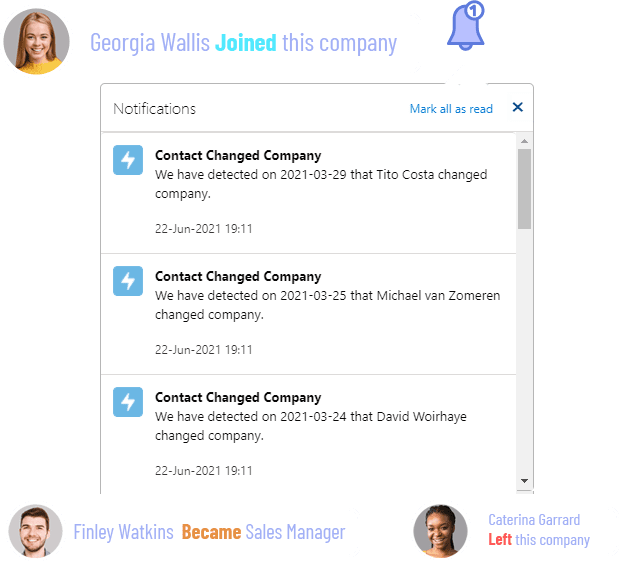
Those fields exist because of our European patent for ecommerce merchant detection, and they are why a technographic query here can return UK merchants over £5m running a specific checkout and shipping into the EU.
Run one technology query and see what the record actually contains. The count is free.
WHAT OUR CLIENTS THINK OF TAMI





What technographic data reveals, by industry
Six verticals our customers filter on, and the signals that matter in each.
-
Payments and fintech
Processors, payment methods, currencies and BNPL adoption per merchant.
Explore payments → -
eCommerce
Platform, checkout stack and verified trading status.
Explore eCommerce → -
SaaS and tech
Martech, analytics, hosting and the tools you integrate with or replace.
Explore SaaS → -
Logistics
Carrier relationships, corridors and cross-border activity.
Explore logistics → -
Manufacturing
Trade portals, online ordering and ERP adoption.
Explore manufacturing → -
Retail
Multi-currency checkout, loyalty and international storefronts.
Explore retail →
Our European patent for merchant detection is what separates a genuine trading merchant from any site running a cart plugin, which is the difference between a usable list and a padded one.
Three questions to ask a technographic data provider
One
How do you tell an active install from leftover code?
Two
What comes with the detection: firmographics, trading status, contacts?
Three
Can you tell me what a company ran before it switched?
Not a stack list. A record you can work.
Every answer comes back as a filterable company record with technology, commercial stack, firmographics and verified contacts attached.
What TAMI AI detects
Conventional technographics cover the first two. The rest are where the commercial signals live.
Platform and CMS
Ecommerce platform, content management and site framework.
Martech and analytics
Tracking, automation, personalisation and measurement tools.
Hosting and infrastructure
Cloud provider, CDN and the technical foundations underneath.
Payments and checkout
Processors, payment methods, currencies and BNPL adoption.
Shipping and carriers
Which carriers a business uses and which corridors it serves.
Merchant and trading status
Whether a company genuinely trades online, verified rather than assumed.
Combine any of them.
Combine any of them with region, size band and revenue band, then export the companies with contacts attached.
WE READ THE SITE, THEN CLASSIFY THE BUSINESS
Detection alone produces a list of domains. TAMI AI reads the live site, detects the full stack, then classifies the business with AI rather than inheriting an industry code, so a filter returns a sector, a size and a named contact.
Sites are re-read continuously, so migrations surface as they happen and the same process enriches your records through our data enrichment API.

458M+
CONTACTS


REAL TIME
REFRESH

What comes back on a technographic record
We don't hand you a domain and a technology name. Six things land in your hands, and every one of them is usable the same day.
- The detected stack Every technology found on the live site, from platform and CMS through to analytics and hosting.
- The commercial layer Payment processors, methods, currencies, BNPL adoption and shipping carriers alongside the technical stack.
- Verified trading status Whether the company genuinely trades online, so leftover code stops inflating your list.
- Business classification Sector, size band, revenue band and region, read from the site rather than a filed code.
- Named decision-makers Verified emails and direct dials inside the companies your filter returned.
- Change history Installs, removals and migrations, so you see what a company switched from and when.
Where does TAMI's technographic data come from?
From the open web, read directly. We don't resell databases or licence third-party detection feeds. Every technology, payment provider, and carrier is read from the live company website and classified with AI. All UK and EU data carries a documented lawful basis and managed suppression.
How TAMI AI compares on technographic data
Two platforms UK teams evaluate alongside us, and what each does best.
| BuiltWith | Wappalyzer | TAMI AI | |
|---|---|---|---|
| Unit of the record | The website | The website | The company |
| Technologies tracked | 110,582 | 8,077 | Full stack |
| Verified merchant status | No | No | Patented |
| Payments and BNPL depth | Partial | Partial | Full |
| Shipping and carrier data | No | Partial | Yes |
| AI business classification | No | No | Yes |
| Verified contacts included | Limited | Limited | Yes |
| Refresh | Crawl cycle | Crawl cycle | Continuous |
| Free tier | Limited lookups | Free extension | Yes |
How to use technographic data properly
Start from a signal, not a technology
Decide what the detected tool means commercially. A rival's platform means displacement; an adjacent one means integration.
Screen out the false positives
Leftover scripts inflate every technographic list. TAMI's verified trading status removes the companies that stopped operating.
Layer the commercial stack over the technical one
Payment provider, carrier, and BNPL are detected alongside the tech stack, which narrows a broad segment into something worth messaging.
Add the firmographics before you export
Region, size, and revenue sit on the same record, so a technology filter returns a segment rather than a list of domains.
Watch the changes, not just the state
Migrations are when budget moves. Because sites are re-read continuously, those surface as events rather than as differences between two exports.
Push it where the work happens
Sync to the CRM, or take the fields through the enrichment API into your own product.
Technology detection tells you a company qualifies. The commercial stack tells you why now, and the contact tells you who. A technographic record needs all three.
WHAT TEAMS DO WITH IT
 Build lists by platform, processor or carrier
- Disqualify on stack before spending a call
- Catch migrations while vendors are being chosen
- Open with something specific to the business
- Find the companies running a competitor's product
- Size adoption of the tools you integrate with
- Track technology share over recent quarters
- Find integration and co-sell partners by stack
- Validate demand before building a connector
- Feed stack data into your own systems by API
A technology name is a filter. A full record is a pipeline. See the difference.
TAKE THE DATA INTO YOUR OWN STACK
Some teams want technographic data in the platform. Others want it in their product, their warehouse or their scoring model.
- The data enrichment API returns technology, payments, carrier, merchant status and contact fields per company, and keeps enriching them as sites change.
- Stripe, United States Postal Service, Trustpilot and DHL use TAMI AI to understand what companies run.
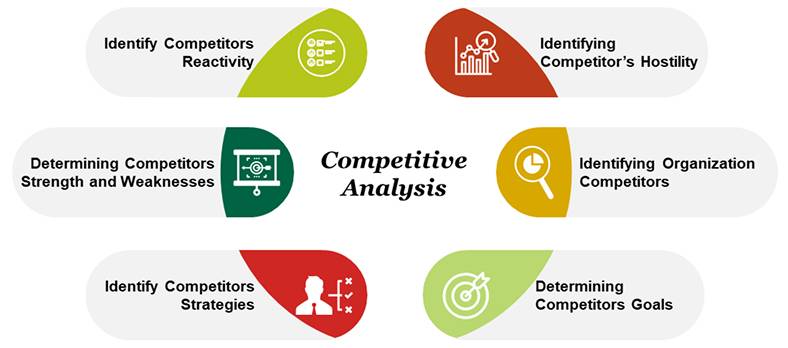
NO CUSTOM DEVS. JUST PLUG IN
With TAMI AI, building a verified UK contact list takes minutes. Setup is instant. Data starts flowing straight away. Here's what TAMI AI integrates with:





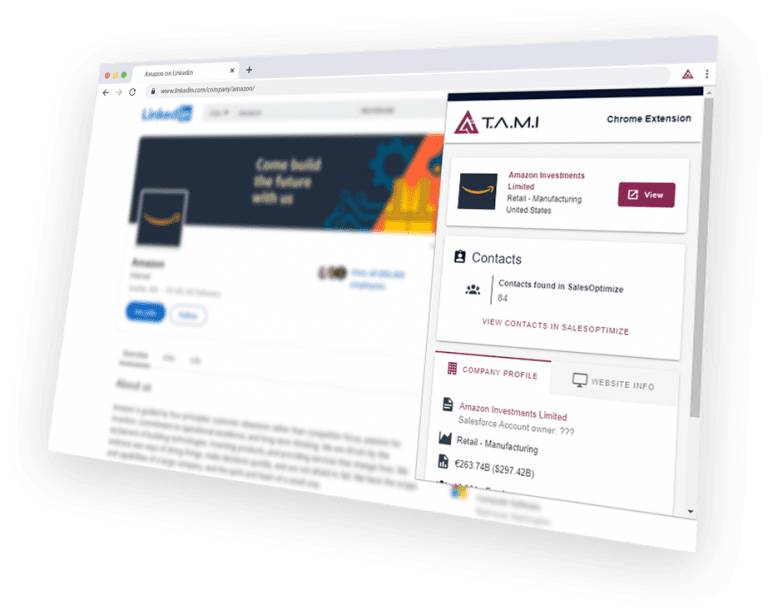
QUALIFY A COMPANY WITHOUT LEAVING THE TAB
Pull verified contacts, tech stack, payment providers and merchant data from any company site or social profile while you're already looking at it. Export straight to your CRM.
- Website
- Facebook
- Twitter
Send us your segment definition and we'll tell you how many UK companies match it, and how many are showing activity this month.
Explore more solutions
Every solution runs on the same UK dataset. Pick the problem you're solving today.
Frequently asked
questions
Stop buying a list of domains
See which UK companies run your target technology, what else is in their stack, and who to call inside them.