FinTech leads that show you the whole payment stack

We hold fintech leads for UK merchants filtered by the processors they run, the wallets and BNPL options at their checkout, and the currencies they accept. Your reps open knowing what is already there and what is missing.

TAMI AI reads live checkouts and detects every payment provider present, alongside the platform, the carriers, and the trading status. That turns a company list into a merchant list, each with the finance and digital decision-makers attached.

1.6m UK companies. 36m verified contacts. Payment stack on every merchant record.

No card needed. Pick a processor and see which UK merchants currently run it.

Filter by processor. Filter by wallet. Filter by currency.

Merchants rarely run one provider. A primary acquirer, a backup, a regional gateway and two wallets is normal, which is why share of checkout matters more than displacement.

What are fintech leads?

FinTech leads are businesses that could buy payment, lending or financial infrastructure from you, along with the people inside them who choose providers. For a PSP, gateway, acquirer or BNPL provider, the merchant is the account and the finance, ecommerce or product lead is the contact.

They are unusually hard to source from conventional data. Nothing filed at Companies House says a business takes card payments, which provider processes them, or how much it turns over online. Two retailers of identical size can run enterprise acquiring or nothing at all.

Useful fintech leads therefore depend on reading the checkout rather than filtering a company database.

What makes these fintech leads different

Three things a conventional prospect list cannot give you.

The full payment stack, not one provider

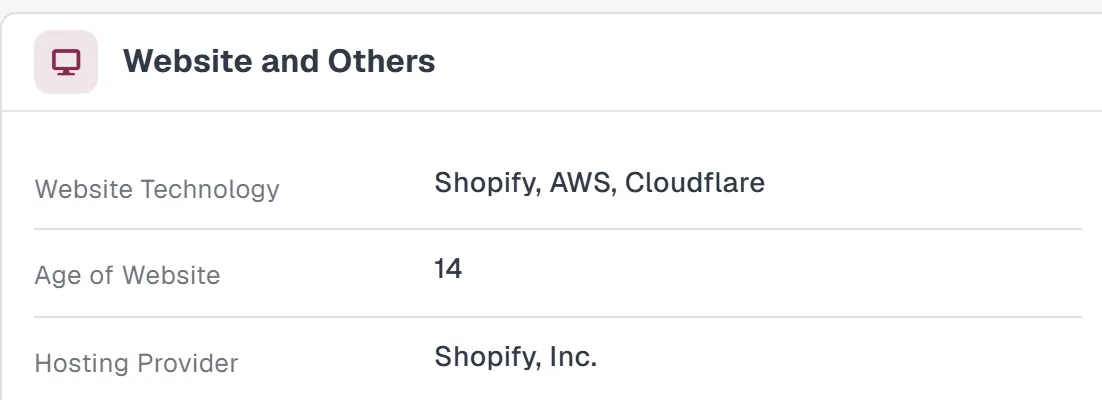
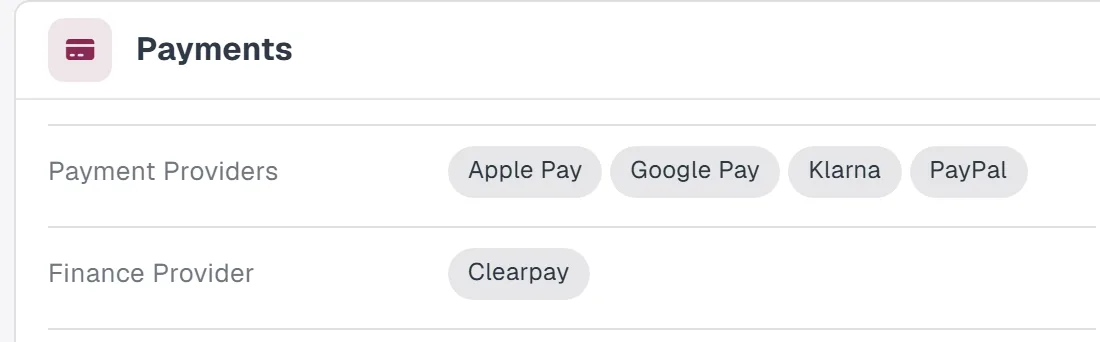
Every processor, wallet and BNPL option detected at the checkout, so you see what you are competing alongside rather than guessing at a single incumbent.

Volume and currency signals

Revenue band, currencies accepted and international storefronts, which is how pricing conversations start in payments.

The people who choose providers

Finance, ecommerce and product leads with verified emails and direct dials, so a merchant is a lead rather than a research task.

TAMI AI gives you UK merchants with the processor, the wallets, the currencies and the contacts on the same record. One Fortune 500 client used this data to enter the payments market and reach a top five position within three years.

```
BUILT FOR PAYMENTS SALES

NOBODY RUNS ONE PAYMENT PROVIDER

This is a share of the checkout market, not a winner-takes-all one.

TAMI AI detects every payment provider present on a merchant's checkout, so you can see who holds the primary relationship, who sits alongside them, and which methods are missing entirely.

That changes the conversation. A merchant with no wallet support, no BNPL or no multi-currency capability has a gap you can name, which is a far better opening than asking who handles their payments.

Pick a processor and see which UK merchants currently run it. Free.

FEEDBACK

WHAT OUR CLIENTS THINK OF TAMI

  • With TAMI, we can find valuable insights into target companies fast and accurately. It's a great tool for sales teams looking to increase their revenue.
    Foteini T
    Sales Manager
  • Our company already has a big market share in the domain of online payments and we couldn't find new leads using the existing tools. With TAMI, within two days, I found more than 40 new leads from companies I'd never heard of before. A real eye-opener!
    Chun Kay T
    Sales Lead
  • One of the best tools for qualifying and identifying companies that aren't found in other databases. Excellent for cross referencing with other tools. Strong tech information too.
    Ariana J
    Account Development Representative
  • TAMI gives us access to rich customer data, verified and reliable, to maximise the chance of successfully reaching our target customers. Our teams like the prebuilt integrations with major CRM platforms and the excellent support we receive from the TAMI team. [TAMI is] an essential tool in our email marketing campaigns.
    Ben J
    CCO
  • We’ve had an excellent experience with TAMI as our go-to lead source for all eCommerce merchant leads. The UI is very intuitive and it's easy to download leads segmented by vertical market, geography, revenue, etc.
    Tim H
    CEO

Which solutions payments teams use most

Six ways PSPs, gateways and fintech teams use TAMI AI.

  • B2B Lead Generation Build merchant lists by processor, payment method, revenue band and region, with contacts attached

    Find your buyers →
  • Customer & Competitor Analysis See which UK merchants run a rival processor or gateway, then build a switch campaign around them

    Find competitor customers →
  • Technographic Data Detect the full checkout stack, from platform and gateway through to wallets and fraud tools

    Target by tech stack →
  • B2B Intent Data Catch BNPL adoption, new processors and re-platforms while the decision is still open

    Catch buying signals →
  • Market Entry Strategy Size a new country or vertical on real merchant counts and processor share before committing

    Test a new market →
  • B2B Contact Database Reach finance directors, heads of ecommerce and product leads directly

    Search contacts →

All six run on the same merchant detection, so a processor filter and a contact search return the same underlying merchants.

Three questions any merchant list should answer

One

Does this business actually take payments online, and at what scale?

Two

Which providers are already at the checkout, and what is missing?

Three

Who signs off the payments decision, and can I reach them?

Not a company list. Merchants with their stack named.

Every answer comes back as a merchant record with the payment stack, the currencies and the decision-makers attached.

What you can filter your fintech leads by

Sector and headcount describe any company. These describe a merchant.

Processor and gateway

Which payment providers are live at the checkout, detected from the site itself.

Payment methods

Cards, wallets, direct debit and local methods accepted per merchant.

BNPL adoption

Whether Klarna, Clearpay or another instalment option is offered.

Currencies and cross-border

Which currencies are accepted and which markets are served.

Revenue and traffic band

Merchant scale, which is what pricing conversations actually turn on.

Verified trading status

Whether the business genuinely sells, so dormant sites stay out.

Combine any of them. Every UK merchant over £5m running a named processor without BNPL is a single query.

TAMI AI

WE READ THE CHECKOUT, NOT THE FILING

Conventional B2B data describes what a company registered. TAMI AI reads what happens at its checkout, which is the only way to know a business takes payments at all. That detection is covered by a European patent, and it is why processor, wallet, BNPL and currency data exist as filters rather than as fields you would assemble from three vendors.

CRM CONTACT ALERTS

What you receive when you build a merchant list

These are the six things that land in your hands.

  • The merchant list Every UK business matching your processor, method and volume criteria, exportable.
  • The stack named per merchant Which providers hold the checkout, so reps know who they are selling alongside.
  • The gaps identified Which methods, wallets or currencies are absent, which is your opening.
  • Contacts inside every merchant Finance, ecommerce and product leads with verified emails and direct dials.
  • CRM delivery Synced and deduplicated against records you already hold, so nothing arrives twice.
  • Provider change alerts Notification when a merchant adds or switches a payment provider.

Is buying fintech contact data legal in the UK?

Yes, with documented sourcing. Checkout and processor detection reads published website data and involves no personal data. Named contacts do, so UK GDPR requires a lawful basis, source transparency and suppression. PECR's email rule excludes corporate subscribers, though sole traders and some partnerships count as individuals.

UK GDPR PECR ICO Registered FSQS Registered

How TAMI AI compares on fintech leads

Two platforms UK teams evaluate alongside us, and what each does best.

SimilarTech Crunchbase TAMI AI
Unit of the record The website The company The trading merchant
Processor detection Yes No Patented
Wallets and BNPL Partial No Yes
Currencies and cross-border No No Yes
Verified trading status No No Yes
Funding and investor data No Yes No
UK firmographic depth Partial Partial 1.6m companies
Verified contacts included Limited Limited Yes
Free tier Trial Yes Yes

How to build a payments prospect list

1

Start from the checkout, not the sector

Retail and hospitality contain merchants processing millions and businesses taking nothing online. Detected payment activity is the qualifier.

2

Map the whole stack, not the primary provider

A merchant running three providers is a different conversation from one running a single acquirer. Both are opportunities, but not the same one.

3

Look for the missing method

No wallet support, no BNPL, no local payment methods in a market they serve. Absence is easier to sell against than presence.

4

Qualify on volume before you quote

Revenue band, traffic signals and currency count separate merchants where your rates are competitive from ones where they are not.

5

Watch for provider changes and re-platforms

Both put payments back in contention. TAMI AI surfaces them as they happen rather than at your next list refresh.

6

Reach finance and ecommerce together

Payments decisions rarely sit with one function. Finance owns the cost, ecommerce owns the conversion, and both need to agree.

In payments, the qualifier is the checkout, not the industry. What a merchant already runs tells you what it still needs.

MERCHANTS YOU CAN REACH

WHAT PAYMENTS TEAMS DO WITH IT

TAMI AI FOR PSPS AND ACQUIRERS
  • Find UK merchants running a rival processor
  • Filter by payment methods and currencies accepted
  • Catch checkout changes while the decision is open
  • Qualify on revenue band before quoting rates
  • Reach finance and ecommerce leads together
TAMI AI FOR BNPL, WALLETS AND ORCHESTRATION
  • Target merchants with no instalment option live
  • Find stores adding a second provider
  • Identify multi-currency merchants needing local methods
  • Separate enterprise retailers from long-tail stores
  • Export straight into your CRM or sequencer

Every prospect that turns out not to take payments costs a rep a call. Filter for the checkout first.

SELLING INTO FINTECH

PAYMENT COMPANY DATA, FOR THE OTHER DIRECTION

Not everyone reading this sells payments. Plenty of teams sell compliance, fraud tooling, infrastructure and professional services to the providers themselves.

  • TAMI AI's payment company data covers UK PSPs, gateways, acquirers and fintechs by region, technology in use and trading status, with the product and commercial contacts attached.
  • Stripe, United States Postal Service, Trustpilot and DHL use TAMI AI to understand the payments market.

NO CUSTOM DEVS. JUST PLUG IN

With TAMI AI, building a verified UK contact list takes minutes. Setup is instant. Data starts flowing straight away. Here's what TAMI AI integrates with:

FIND MORE LEADS

QUALIFY A COMPANY WITHOUT LEAVING THE TAB

Pull verified contacts, tech stack, payment providers and merchant data from any company site or social profile while you're already looking at it. Export straight to your CRM.

  • Website
  • Facebook
  • Twitter
You can even view & export this data straight into your CRM.

Tell us which platform and payment provider you target and we'll tell you how many UK merchants match, with contacts.

Explore more industries

Every industry runs on the same UK dataset. Pick the market you sell into.

eCommerce

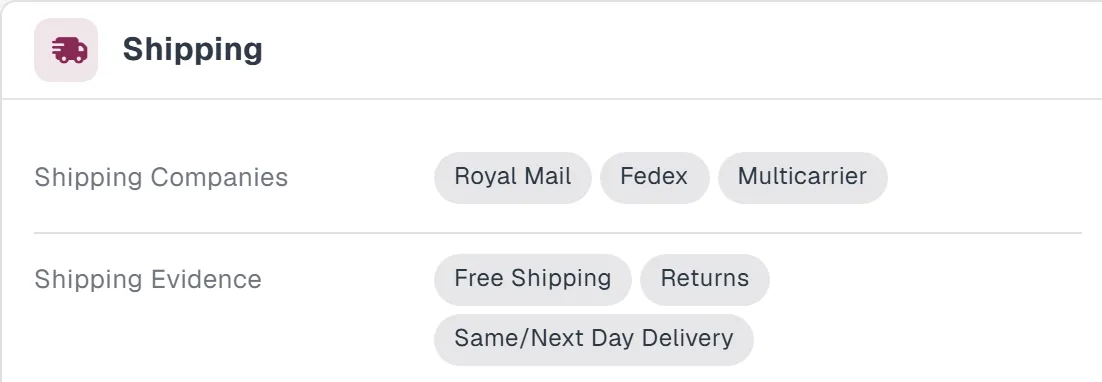
Find UK merchants by platform, checkout, payment provider and carrier, with verified trading status on every record.

Open the storefronts →

Logistics & Shipping

Reach shippers and 3PLs by carrier relationship, corridor and cross-border volume.

Track the shipments →

SaaS & MarTech

Target companies by the tools they already run, including the ones you replace or integrate with.

Read the stack →

Manufacturing

Identify firms modernising systems, from trade portals and online ordering through to ERP.

Spot the modernisers →

Retail

Reach multi-site and cross-border operators, separated from single-location sellers.

Map the estates →

Healthcare

Find providers and suppliers by size, region and the systems they run.

Reach the providers →

Education

Reach institutions and suppliers across the UK by size, type and technology in use.

Open the campuses →

Travel & Hospitality

Target operators by booking platform, payment setup and estate size.

Book the operators →

Finance & Banking

Reach institutions and their suppliers by region, size and technology stack.

Reach the institutions →

Telecommunications

Identify operators and resellers by infrastructure and technology footprint.

Trace the networks →

Energy & Utilities

Find suppliers and service providers across the UK energy market.

Power your pipeline →

Real Estate

Reach agencies, developers and property services firms by region and size.

Find the portfolios →

Frequently asked
questions

1How long does it take to switch payment provider?
Technically, days for a hosted checkout, months for a bespoke integration. The delay is rarely technical: it is contract terms, chargeback history migration, and the merchant's fear of downtime during peak trading.
2When is the worst time to approach a merchant about payments?
Between October and January for retail. Nobody changes checkout infrastructure before peak season, so the same pitch that gets ignored in November often lands in February when the post-peak review happens.
3How do you get past the incumbent acquirer on rate alone?
Rate alone rarely wins, because switching costs offset small savings. Authorisation rates, settlement timing, chargeback handling and support response usually move a merchant faster than a few basis points.
4What is payment orchestration and who buys it?
Software routing transactions across several providers rather than one. It is bought by merchants already running multiple processors, which makes detected stack depth the clearest qualifier for anyone selling it.
5 How do you find merchants with high authorisation failure?
You cannot detect it directly. What you can detect are the conditions that cause it: a single provider, cross-border trading without local methods, and no fallback processor at the checkout.
6Which merchants are most likely to add BNPL?
Stores with high average basket values, fashion and furniture especially, that already offer multiple card options but no instalment provider. The gap plus the category is a stronger signal than either alone.
7Do merchants tell you who processes their payments?
Not usually, and often the person you reach genuinely does not know. Detecting it beforehand removes a discovery question that can take two calls to answer properly.
8How do you sell FX or multi-currency to a UK merchant?
Start with merchants already accepting more than one currency or shipping internationally, since they have the problem. Merchants trading domestically have no need yet, whatever their size.
9What size merchant is worth a direct sales approach?
It depends on your take rate. Work backwards: annual processing volume multiplied by your margin has to exceed acquisition cost. Below that threshold the account belongs in self-serve rather than direct sales.
10How do you identify merchants trialling a competitor?
Watch for a second provider appearing alongside the first. Merchants rarely switch outright, they run parallel first, so a new processor at the checkout usually means an evaluation already in progress.
11What compliance data do fintech sales teams need?
Trading status, registered entity type and whether the business is a sole trader, since that determines both PECR treatment for outreach and the onboarding checks that follow if the deal closes.
12Can you target merchants by fraud or chargeback risk?
Not directly, as neither is public. Proxies exist: high-risk verticals, cross-border trading, digital goods and absent fraud tooling at the checkout all correlate with elevated risk profiles.
13How is payment company data different from merchant data?
Merchant data describes businesses that accept payments and is used to sell them acquiring or checkout tools. Payment company data describes the providers themselves and is used to sell into them.

Get the fintech leads your reps can actually work with

Filter UK merchants by processor, payment method and currency, see what is already at the checkout, and take the contacts with you.