
Ecommerce leads you cannot get from a company register
Most ecommerce leads are bought from a business register, and nothing filed at Companies House says a company sells online, which platform it runs or whether it is still trading. That is why those lists arrive half dormant.
TAMI AI detects genuine trading merchants from their live storefronts, then attaches the platform, the payment providers, the carriers and the decision-makers. You get merchants you can actually sell to rather than domains that once had a cart plugin.
Patented merchant detection. Platform, payments and carriers on every record.
No card needed. Filter by platform and see how many real merchants come back.
A cart plugin is not a merchant
Thousands of UK sites run ecommerce software and sell nothing. They inflate every list built on technology detection alone. Verified trading status is what separates a prospect from a parked domain.

What are ecommerce leads?
Ecommerce leads are businesses selling online that you can approach as prospects, along with the people inside them who make buying decisions. For anyone selling payments, fulfilment, software or services into retail, the merchant is the account and the ecommerce director or founder is the contact.
The category is unusually hard to source. Conventional B2B data comes from registers, and nothing in a filing indicates online trading. A merchant shipping ten thousand orders a month and a dormant shell can carry the same SIC code and size band.
Ecommerce leads therefore depend on detection: reading the storefront to establish what a business runs and whether it genuinely trades.
Why ecommerce prospect lists disappoint
Three failures, and all three show up as wasted rep time.
Dead stores counted as leads
Abandoned storefronts keep their software installed for years. Detection alone cannot tell them from active merchants, so lists arrive padded.
Platform without context
Knowing a store runs a given platform says nothing about its size, its payment setup or whether it ships internationally. One filter is not a segment.
No route to the buyer
Merchant lists frequently stop at a domain. A store with no named contact is research to be done, not a lead.
TAMI AI verifies the merchant, reads the full commercial stack and attaches the contacts, so an ecommerce list arrives ready to work rather than ready to clean.
THE REGISTER DOES NOT KNOW WHO SELLS ONLINE
Every filing-based dataset is blind to the thing that defines this market.
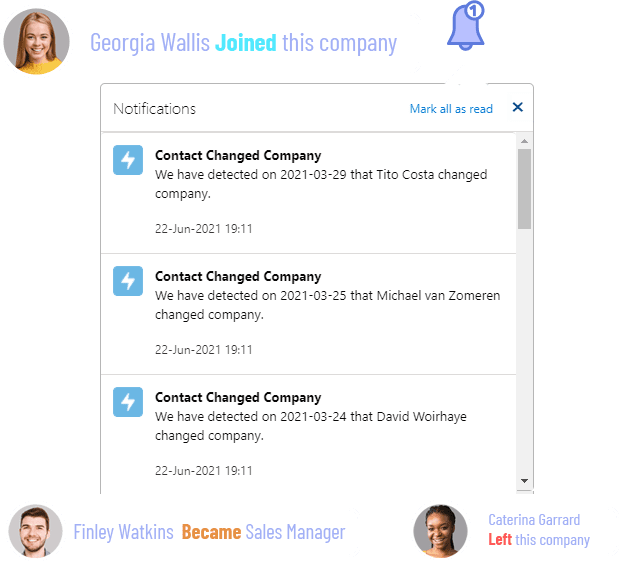
That is the difference between a list of companies that might sell online and a list of merchants that demonstrably do, filtered by exactly the infrastructure your product plugs into.
Filter by platform and payment provider, and see how many merchants come back. Free.
WHAT OUR CLIENTS THINK OF TAMI





Which solutions ecommerce vendors use most
Six ways teams selling into ecommerce use TAMI AI.
-
B2B Lead Generation
Build merchant lists by platform, revenue band and payment setup, with contacts attached
Find your buyers → -
Technographic Data
Target by checkout, platform, martech and hosting rather than by sector code
Target by tech stack → -
Customer & Competitor Analysis
See which merchants run a rival checkout, gateway or app, then build a switch campaign
Find competitor customers → -
B2B Intent Data
Catch re-platforms, new payment providers and BNPL adoption while the decision is open
Catch buying signals → -
Lookalike Company Targeting
Turn your best merchant accounts into every UK store that resembles them
Clone your best customers → -
Retail
Reach ecommerce directors, heads of digital and founders with verified emails and direct dials
Search contacts →
Every one of these runs on the same merchant detection, so a platform filter and a contact search return the same underlying records.
Three questions any merchant list should answer
One
Is this store actually trading, or does it just have the software installed?
Two
What does it run, take payment through and ship with?
Three
Who inside it makes the decision, and can I reach them?
Not a domain list. Merchants with contacts.
Every answer comes back as a verified merchant record with the commercial stack and decision-makers attached.
What you can filter UK merchants by
Sector and size describe any company. Our ecommerce leads describe a store.
Platform
Shopify, WooCommerce, Magento, BigCommerce and the rest, read from the live storefront.
Payment providers
Which processors a merchant runs, and which methods it accepts.
BNPL adoption
Whether the store offers Klarna, Clearpay or another instalment option.
Shipping and carriers
Who fulfils the orders and which destination markets are served.
Verified trading status
Whether the merchant genuinely sells, not just whether software is present.
Revenue and traffic band
Store scale, so enterprise and long-tail merchants can be separated.
Combine any of them. Every UK Shopify store over £5m running Klarna and shipping into the EU is a single query.
WE READ THE STOREFRONT, NOT THE FILING
Most B2B data describes what a company registered. TAMI AI reads what it sells and how, which is the only way to identify a merchant at all. That detection is covered by a European patent, and it is why platform, checkout, BNPL and carrier data exist as filters rather than as fields you would have to assemble from three vendors.

458M+
CONTACTS


REAL TIME
REFRESH


What comes back on a merchant record
We don't hand you a domain and a platform name. Six things arrive together with your ecommerce leads.
- Verified trading status Confirmation the store actually sells, so dormant sites stay out of the list.
- The full commercial stack Platform, checkout, payment providers, BNPL and carriers.
- Store scale Revenue band and traffic signals, so segmentation reflects size.
- Cross-border activity Which markets the merchant ships to and which currencies it accepts.
- Named decision-makers Verified emails and direct dials for ecommerce, digital and commercial leads.
- Change history Platform migrations and provider switches, so you can time the approach.
Is buying ecommerce contact data legal in the UK?
Yes, with documented sourcing. Store detection reads published website data and involves no personal data. Named contacts do, so UK GDPR requires a lawful basis, source transparency and suppression. PECR's email rule excludes corporate subscribers, but many merchants trade as sole traders and count as individuals.
How TAMI AI compares on ecommerce leads
Two platforms UK teams evaluate alongside us, and what each does best.
| Store Leads | BuiltWith | TAMI AI | |
|---|---|---|---|
| Unit of the record | The store | The website | The merchant |
| Platform detection | Yes | Extensive | Yes |
| Verified trading status | Partial | No | Patented |
| Payment provider depth | Partial | Partial | Full |
| BNPL detection | Partial | Partial | Yes |
| Carrier and corridor data | No | No | Yes |
| Verified contacts included | Limited | Limited | Yes |
| UK firmographic depth | Partial | No | 1.6m companies |
| Free tier | Trial | Limited lookups | Yes |
How to build an ecommerce list, in six steps
Start from the infrastructure, not the sector
Decide which platform, gateway or carrier your product depends on. That is your real qualifier, and retail as a category is not.
Filter for merchants that actually trade
Software presence is not proof of trading. Verified status is what removes the dormant stores that pad every list.
Layer the payment and fulfilment stack
Processor, BNPL and carrier narrow a broad platform segment into stores whose setup matches what you sell.
Separate by store scale
An enterprise retailer and a long-tail store need different messages, different pricing and often different teams.
Watch for re-platforms and provider changes
A migration puts every adjacent vendor back in contention. TAMI AI surfaces those as they happen rather than at your next export.
Get to the named buyer
Ecommerce decisions sit with digital and commercial leads, often alongside a founder. A store without a contact is not yet a lead.
For ecommerce leads, the qualifier is infrastructure, not industry. What a merchant runs tells you more than what it sells.
WHAT TEAMS SELLING INTO ECOMMERCE DO WITH IT
 Find merchants on a rival gateway
- Filter by payment methods and BNPL
- Catch checkout changes as they happen
- Target by cross-border volume and currency
- Reach the finance and digital decision-makers
- Build lists by platform and app stack
- Find stores mid-migration, when vendors are chosen
- Target merchants running tools you integrate with
- Separate enterprise retailers from long-tail stores
- Export straight into your CRM or sequencer
Every dormant store on your list costs a rep an hour. Filter them out first.
SHOPIFY STORE DATA, DOWN TO THE CHECKOUT
Platform alone is too broad to be a segment. Most UK Shopify stores are small, and the ones worth your time are separated by revenue band, payment setup and whether they ship internationally.
- TAMI AI's Shopify store data covers the apps and payment providers running on each storefront, the carriers fulfilling orders, verified trading status and the contacts inside the business.
- Stripe, United States Postal Service, Trustpilot and DHL use TAMI AI to understand the merchant market.
NO CUSTOM DEVS. JUST PLUG IN
With TAMI, building a verified UK contact list takes minutes. Setup is instant. Data starts flowing straight away. Here's what TAMI integrates with:





QUALIFY A COMPANY WITHOUT LEAVING THE TAB
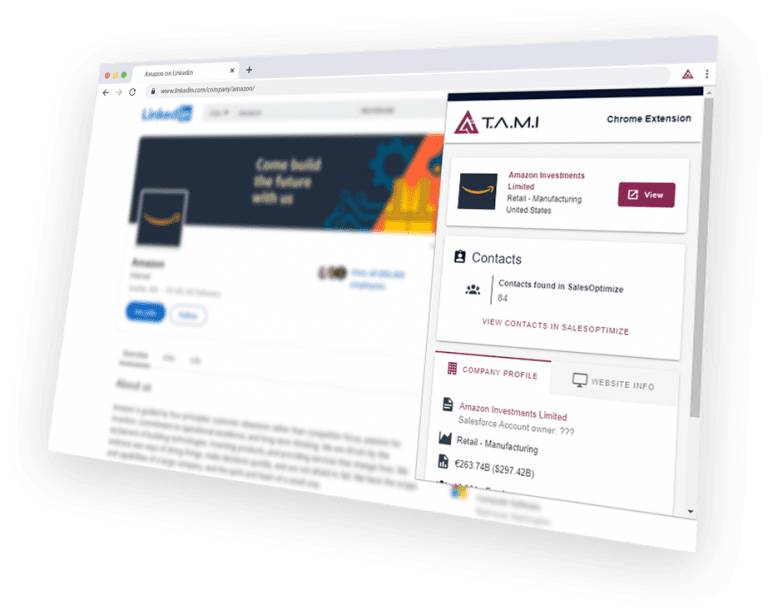
Pull verified contacts, tech stack, payment providers and merchant data from any company site or social profile while you're already looking at it. Export straight to your CRM.
- Website
- Facebook
- Twitter
Tell us which platform and payment provider you target and we'll tell you how many UK merchants match, with contacts.
Explore more industries
Every industry runs on the same UK dataset. Pick the market you sell into.
Frequently asked
questions
Find the right ecommerce leads today
Filter UK merchants by platform, payment provider and carrier, confirm they actually trade, and take the contacts with you.