Most teams comparing Cognism vs ZoomInfo aren't really asking which is better. They're asking which one will hurt less when the renewal bill lands. Both platforms sit at the top of the B2B data category. Both cost north of $15,000 a year for the smallest tier. And both come with passionate users who'll tell you the other one is overpriced and full of stale records.
So the question worth answering isn't "which wins" in the abstract. It's which one actually fits the way your team sells, where your buyers live, and what your data has to do once it's in your CRM.
This guide breaks down how the two compare in 2026 across the things that matter: data accuracy, geographic coverage, compliance, platform breadth, and what you actually pay. We'll also cover where neither of them is the right answer, because for a growing number of teams, the honest verdict is "look at a third option."
TL;DR
ZoomInfo wins on North American depth, database scale, and the breadth of its all-in-one platform, with intent data and conversation intelligence built in. Cognism wins on European coverage, GDPR-first compliance, and phone-verified mobile accuracy through its Diamond Data.
Both start around $15K a year, and neither consistently breaks 85% email accuracy in independent tests. If you sell into the US, lean ZoomInfo. If you sell into Europe and rely on cold calling, lean Cognism.
If your problem is real-time data freshness, AI-driven classification, or merchant and tech stack intelligence, neither was built for that.
ZoomInfo at a glance
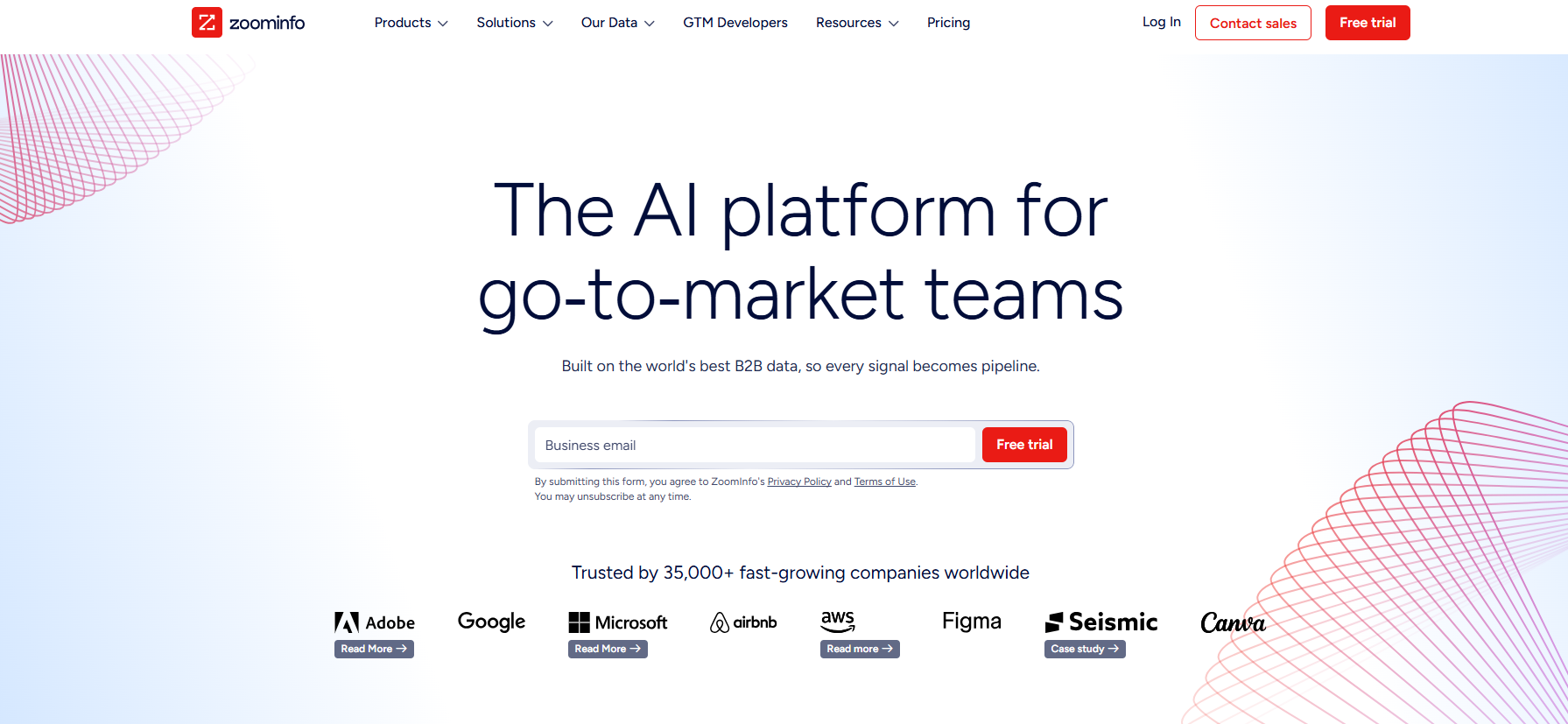
ZoomInfo is the largest B2B data provider in the US, packaged as a multi-product suite (SalesOS, MarketingOS, OperationsOS). The database covers over 260 million professional profiles and 100 million companies, with later figures from the company citing 500M+ contacts and 135M+ verified phone numbers globally.
Verification leans on automation at scale, with ML scanning of 28 million site domains daily and a 300+ person Data Training Lab, producing what ZoomInfo claims is up to 95% first-party accuracy.
Pros
Where ZoomInfo really differentiates is platform breadth. Beyond contact data, you get intent signals, Chorus conversation intelligence, Copilot AI, and tight integrations with Salesforce, HubSpot, Outreach, Salesloft, and 50+ other tools.
For enterprise teams that want one vendor handling data, signals, and orchestration, that bundling is the value proposition. If integration depth is what's pulling you toward ZoomInfo, it's worth comparing how the broader category handles it. Our guide to data integration tools covers what separates a genuine integration layer from a marketing slide.
Cons
The downsides are well-documented. Pricing is opaque and climbs fast with add-ons. European data is thinner than North American data, particularly for SMB and mid-market contacts outside the UK.
The 95% accuracy claim sits uncomfortably next to independent testing that consistently shows email deliverability averaging around 85%, meaning roughly 15 of every 100 sends bounce.
At ZoomInfo's price point, that's real wasted spend, and it compounds across every campaign you run. We unpacked why bounce rates this high quietly destroy pipeline economics in our breakdown of email campaign optimisation.
Cognism at a glance
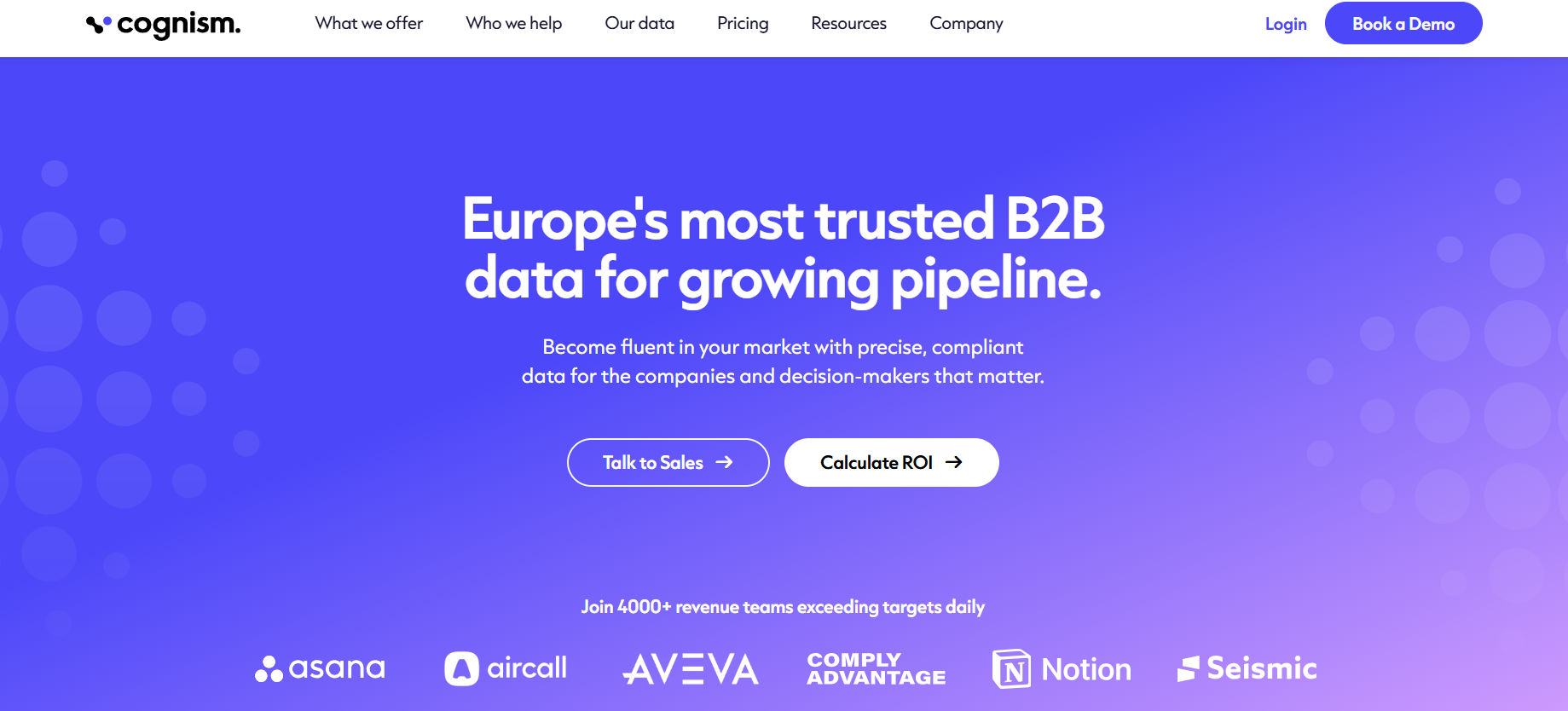
Cognism was founded in London with GDPR compliance baked in from day one. The platform serves mid-market and enterprise teams scaling across European markets, with phone-verified mobile numbers (branded Diamond Data) as the headline feature.
A human researcher physically calls the number, confirms the contact answers, and marks it verified, which Cognism says produces a 20% connection rate, roughly 7x the industry standard for cold dials into EMEA.
Pros
Compliance is where Cognism has the clearest edge over ZoomInfo. The platform screens against 15 Do Not Call registries including the UK's TPS/CTPS, Germany, France, Spain, Sweden, and Italy, which no other major sales intelligence provider publicly matches.
If you're cold calling into Europe, that breadth matters because the fines for hitting a registered number aren't theoretical.
Cons
The trade-offs are real too. North American coverage is thinner than ZoomInfo's. The database overall is smaller. There's no native sequencing, so you'll pair it with Outreach or Salesloft, which adds another tool to the stack and another integration to maintain. A
nd while Cognism advertises predictable pricing, Diamond Data access often adds a significant premium on top of the base.
Cognism vs ZoomInfo: comparison check
Here’s how the Cognism vs ZoomInfo debate looks in terms of usability:
|
Factor |
ZoomInfo |
Cognism |
|
Best for |
North American sales, enterprise scale, all-in-one GTM |
European sales, GDPR-heavy outbound, cold calling EMEA |
|
Database size |
500M+ contacts, 100M+ companies |
Smaller global pool, deeper EU coverage |
|
Geographic strength |
North America, growing in EMEA |
EMEA and UK, expanding into NA |
|
Phone data |
135M+ verified numbers, algorithmic verification |
Diamond Data, human phone-verified mobiles |
|
Email accuracy (independent tests) |
~85% deliverability average |
~85% deliverability average |
|
Compliance |
ISO 27001, SOC 2, TRUSTe GDPR, DNC across 8 countries |
GDPR-first design, DNC across 13-15 countries |
|
Platform breadth |
Intent, conversation intelligence, Copilot AI, MarketingOS |
Focused on contact data plus Sales Companion AI |
|
Native sequencing |
Yes, built-in |
No, integrates with Outreach and Salesloft |
|
Starting price |
~$14,995/yr for 3 seats (Professional+) |
~$15,000-$25,000/yr, custom-quoted |
|
Pricing transparency |
Opaque, heavy add-ons |
More predictable, Diamond access often extra |
|
Contract |
Annual, multi-year common |
Annual standard |
Where ZoomInfo wins
The honest case for ZoomInfo comes down to scale and integration. If your motion is North American and your team is large enough to use the broader platform (intent, Chorus, Copilot, orchestration), you're getting more than a contact database. You're getting a workflow layer that other tools won't match without you assembling four vendors yourself.
It also wins on procurement friction. Most enterprise buyers have already signed off on ZoomInfo at some prior company, which means less internal selling.
Combined with the deepest US firmographic and contact pool on the market, that makes ZoomInfo the default for large North American sales orgs. The catch is that you're paying for the bundle even if you only use half of it.
Where Cognism wins
Cognism's edge is sharper because it's narrower. For European outbound, particularly phone-heavy outbound, the verified mobile data and DNC coverage are genuinely differentiated.
Customers report substantial accuracy lifts moving from ZoomInfo to Cognism for EU contacts. One Bright Network team famously reported moving from "around 50%" contact accuracy on ZoomInfo to "closer to 85%" on Cognism for their EU prospecting.
Pricing also tends to be more predictable. Where ZoomInfo's quote multiplies as you add features, Cognism's model includes more in the base, which makes year-on-year budgeting easier. If you sell primarily into Germany, France, the Nordics, or the UK, and you cold call, Cognism is the better-fitting tool.
What neither does particularly well
This is the part most "Cognism vs ZoomInfo " guides skip, because they're written by one of the two vendors. There are real gaps both platforms share, and if your motion sits inside those gaps, picking either one means paying enterprise prices for the wrong tool.
1. Data freshness
The biggest shared weakness is data freshness. Both platforms refresh on cycles that don't match how fast buyers actually change jobs, switch tech stacks, or shut down. By the time a "verified" record reaches your CRM, the contact may already have moved roles.
Independent testing consistently puts email deliverability around 85% on both, and that ceiling is largely a data-freshness problem rather than a sourcing one. The downstream cost shows up across the funnel, which is why teams serious about pipeline efficiency increasingly treat enrichment as ongoing rather than periodic.
Our guide to B2B data enrichment for sales teams covers what good looks like.
2. Data classification
The second gap is classification. Both platforms rely heavily on standard SIC and NAICS codes that were designed for the pre-internet economy and don't accurately describe modern businesses.
That’s particularly true for ecommerce, fintech, and SaaS companies whose actual business model rarely matches the code they were assigned.
If you're trying to target "Shopify merchants doing over $5M in cross-border GMV" or "European fintechs using Stripe and a specific BNPL provider," neither platform was built for that level of intelligence.
This matters more than it sounds, because classification is what makes ideal customer profiling actually work. Bad codes feed bad ICPs, and bad ICPs feed wasted reps.
3. Data depth
The third gap is merchant and tech stack depth.
Both surface basic technographics, but neither was designed around detecting payment providers, shipping methods, ecommerce platforms, or merchant traffic at the granularity that platforms targeting commerce ecosystems actually need.
The third option most teams don't consider
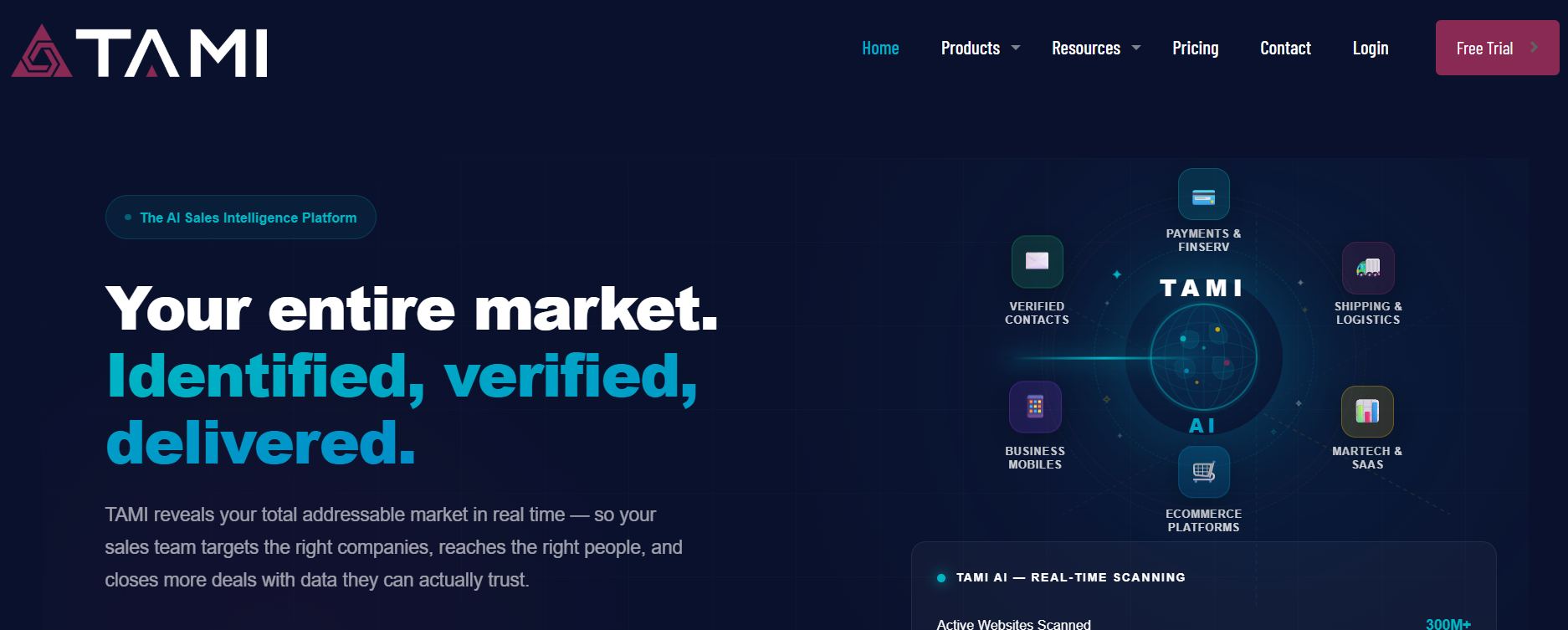
If you read the gaps above and recognised your own use case, this is where it's worth widening the search beyond just these two. TAMI was built for teams whose problem isn't "we need more contacts," but "we need accurate, real-time intelligence about who's actually a fit, with verified emails that don't bounce."
Superior contact data
A few things genuinely differ. TAMI's contact data is refreshed in real time rather than on a quarterly cycle, with bounce rates kept under 5%, well below the ~85% deliverability ceiling that both ZoomInfo and Cognism hit in independent tests.
AI-based enrichment
AI-based classification replaces SIC/NAICS guesswork, which matters if you're targeting internet-native businesses whose models don't map cleanly to legacy codes.
Merchant intelligence
And there's deep merchant intelligence, including a European patent for ecommerce merchant detection, plus payment provider, shipping, and ecommerce platform data that neither Cognism nor ZoomInfo treats as core.
If your motion involves cross-border commerce or entering new vertical markets, that depth changes what's possible, which is why teams use it as the foundation for serious market entry strategy work rather than guesswork.
How does TAMI stand against the competition?
For teams measured on conversion rather than database volume, this is where the maths changes. The same UK martech team we worked with previously was comparing TAMI against ZoomInfo and Cognism. While using TAMI, they reported a 10x higher inbound conversion rate alongside a 95% email delivery rate.
None of that means TAMI replaces ZoomInfo or Cognism for every use case.
If you need broad NA enterprise scale, ZoomInfo still wins. If you need EU phone-verified mobiles for cold calling, Cognism still wins.
But if your real problem is data freshness, accurate classification, and ecommerce or fintech intelligence, the comparison was never two platforms. It was three.
For the deeper view on how data quality decides every downstream outcome, our CRM data enrichment solution shows how real-time refresh changes what your pipeline can actually do, and our breakdown of a predictable B2B demand generation engine walks through how the data layer plugs into the rest of the go-to-market motion.
The honest verdict
For teams measured on conversion rather than database volume, this is where the maths changes. The same UK martech team we worked with previously was comparing TAMI against ZoomInfo and Cognism. While using TAMI, they reported a 10x higher inbound conversion rate alongside a 95% email delivery rate.
None of that means TAMI replaces ZoomInfo or Cognism for every use case.
If you need broad NA enterprise scale, ZoomInfo still wins. If you need EU phone-verified mobiles for cold calling, Cognism still wins.
But if your real problem is data freshness, accurate classification, and ecommerce or fintech intelligence, the comparison was never two platforms. It was three.
For the deeper view on how data quality decides every downstream outcome, our CRM data enrichment solution shows how real-time refresh changes what your pipeline can actually do, and our breakdown of a predictable B2B demand generation engine walks through how the data layer plugs into the rest of the go-to-market motion.