
Retail leads that tell you the difference between one shop and an estate
We hold retail leads for UK retailers sorted by how they actually trade: in-store, online, or both, at what scale and on what systems. Your reps stop pitching an enterprise solution to a single-site shop.
TAMI AI reads live retailer websites and detects the channel signals a filing never carries. Whether a business sells online, which platform and checkout it runs, which currencies it accepts and whether it is genuinely trading, with the commercial contacts attached.
1.6m UK companies. 36m verified contacts. Channel and platform on every record.
No card needed. Filter by channel and scale and see what comes back.
The same company record covers a corner shop and a national chain.
Retail is the sector where a single registered entity tells you least. Headcount hints at scale, but nothing in a filing says how a business reaches its customers, which is what decides whether you have a prospect.
What are retail leads?
Retail leads are businesses selling to consumers that could buy from you, along with the people inside them who make purchasing decisions. For anyone supplying EPOS, payments, fixtures, energy, staffing or software, the retailer is the account and the operations, buying or ecommerce lead is the contact.
Retail is the hardest sector to qualify from company data alone, because the range inside a single classification is enormous. One entity might run a market stall, a regional chain or a national brand with an online arm. Useful retail company data therefore has to establish how a business trades and at what scale before any of the firmographics matter.
What makes these retail leads different
Three things a company list cannot give you.
Channel, not just sector
Whether a retailer sells in store, online or both, detected from its live web presence rather than assumed from its classification.
Scale signals that hold up
Revenue band, currencies accepted and international reach, so a single-site shop never lands in an enterprise campaign.
The people who buy
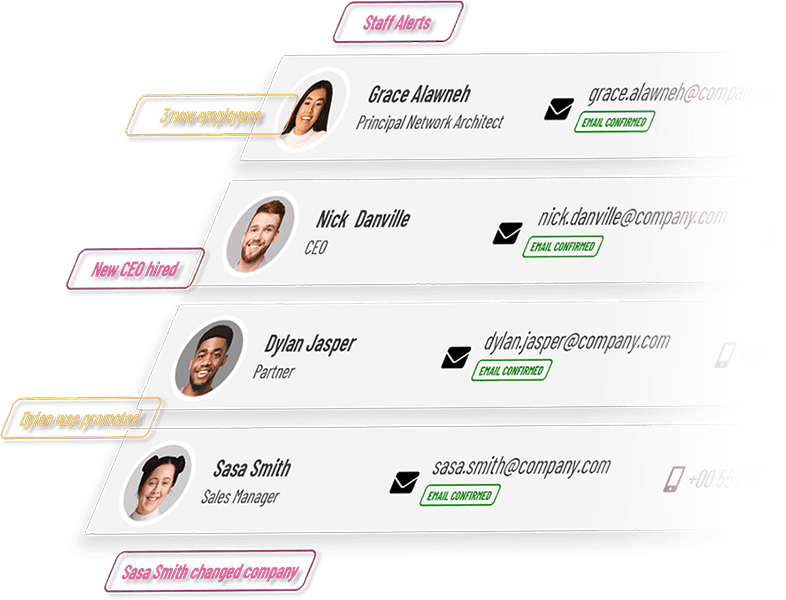
Operations, buying, ecommerce and commercial leads with verified emails and direct dials, because retail decisions rarely sit with one function.
TAMI AI gives you UK retailers with the channel, the platform, the payment setup and the contacts on the same record, all confirmed against a live web presence.
SECTOR TELLS YOU NOTHING ABOUT SCALE IN RETAIL
Two companies with the same classification can be a market trader and a household name.
That is the difference between a targeted campaign and a scattergun one. An enterprise pitch to an independent wastes a call, and an independent pitch to a national chain never reaches the right person at all.
Filter by channel and scale and see how the market splits. Free.
WHAT OUR CLIENTS THINK OF TAMI AI





Which solutions retail teams use most
Six ways teams selling into retail use TAMI AI.
-
B2B Lead Generation
Build retailer lists by channel, scale, region and systems in use, with contacts attached
Find your buyers → -
Sales Territory Planning
Build field patches on real retailer counts per region, which is how retail sales is organised
Plan your patches → -
Technographic Data
Detect ecommerce platform, checkout, loyalty and analytics, so systems become a filter
Target by tech stack → -
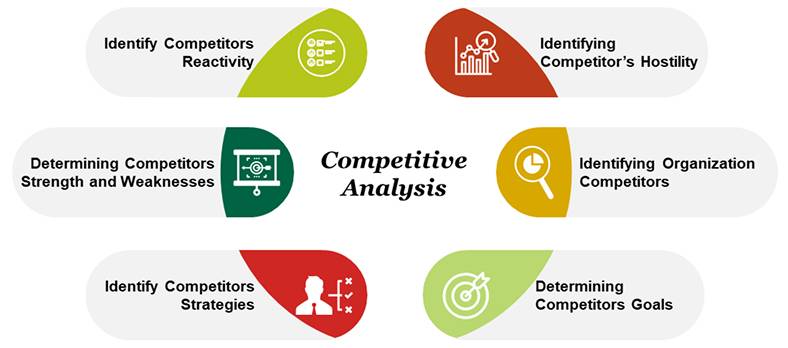
Customer & Competitor Analysis
See which retailers run a rival system or supplier, then build a switch campaign
Find competitor customers → -
B2B Intent Data
Catch re-platforms, new payment providers and expansion into new markets as they happen
Catch buying signals → -
B2B Contact Database
Reach heads of retail operations, buyers and ecommerce leads directly
Search contacts →
All six run on the same records, so a channel filter and a contact search return the same underlying retailers.
Three questions any retailer list should answer
One
Does this business sell in store, online, or both?
Two
What scale is it actually operating at?
Three
Who handles buying and operations, and can I reach them?
Not a company list. Retailers sorted by how they trade.
Every answer comes back as a retailer record with channel, platform, scale signals and decision-makers attached.
Filter your retail leads by
Sector and headcount describe any company. These describe how a retailer trades.
Channel signals
Whether the business sells online, points customers to physical locations, or both.
Ecommerce platform
Which platform and checkout the online side runs on, where one exists.
Payment and loyalty systems
Processors, payment methods and loyalty tooling detected at the checkout.
Currencies and international reach
Which currencies are accepted and which markets are served.
Revenue and traffic band
Scale, so independents and national operators separate cleanly.
Verified trading status
Combine any of them. Every trading UK retailer selling online and in store, accepting more than one currency, is a single query.
WE READ HOW A RETAILER TRADES
Conventional retail company data describes what a business registered and roughly how many people it employs. TAMI AI reads the live web presence and works out how it actually reaches customers, which platform and payment setup sit behind that, and whether it is still trading. In retail, channel and scale predict fit far better than classification ever will.

458M+
CONTACTS


REAL TIME
REFRESH


What you receive when you build a retailer list
These are the six things that land in your hands.
- The retailer list Every UK business matching your channel, scale and region criteria, exportable.
- Channel identified per retailer Online, physical or both, so the pitch matches how the business operates.
- The systems in use Platform, checkout, payment providers and loyalty tooling where present.
- Contacts inside every retailer Operations, buying, ecommerce and commercial leads with verified details.
- CRM delivery Synced and deduplicated against records you already hold, so nothing arrives twice.
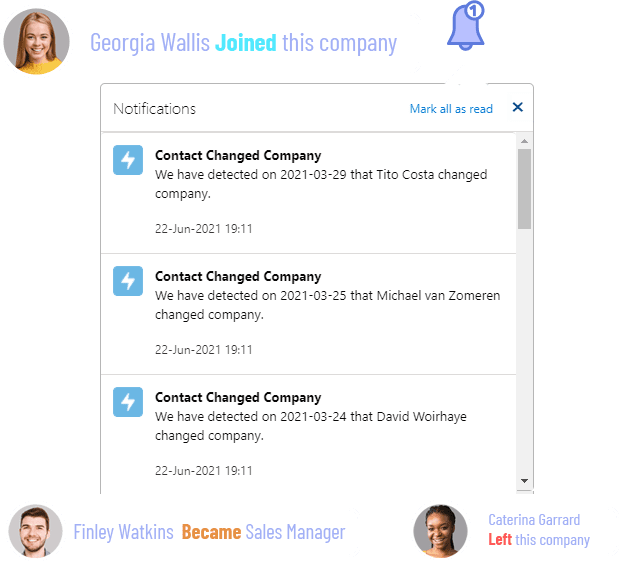
- Change alerts Notification when a retailer re-platforms, adds a provider or enters a new market.
Is buying UK retail contact data legal?
Yes, with documented sourcing. Channel and systems detection reads published website data and involves no personal data. Named contacts do, so UK GDPR requires a lawful basis, source transparency and suppression. PECR's email rule excludes corporate subscribers, though sole traders and some partnerships count as individuals, which is common among independent retailers.
How TAMI AI compares on retail company data
Two platforms UK teams evaluate alongside us, and what each does best.
| Local Data Company | GlobalData | TAMI AI | |
|---|---|---|---|
| Physical store locations | Extensive | Partial | No |
| Store openings and closures | Yes | No | No |
| Online channel detection | No | No | Yes |
| Platform and checkout detection | No | No | Yes |
| Payment and loyalty systems | No | No | Yes |
| Market-level forecasting | No | Yes | No |
| Verified contacts included | Limited | Limited | Yes |
| Refresh | Survey cycle | Research cycle | Continuous |
| Free tier | No | No | Yes |
How to build a retail prospect list, in six steps
Establish the channel first
Online, physical or both changes the product, the price and the person you need to reach. Everything else is refinement.
Band by scale before you segment
The gap between an independent and a national operator is wider in retail than in any other sector, and a single list serving both serves neither.
Detect the systems, not the sector
Platform, checkout and loyalty tooling tell you whether a retailer has the infrastructure your product assumes.
Follow the currencies for international reach
Accepted currencies identify retailers selling beyond the UK, which usually means a more complex operation and a larger budget.
Watch re-platforms and provider changes
Both put every adjacent supplier back in contention. TAMI AI surfaces them as they happen rather than at your next list refresh.
Reach buying and operations together
Buying controls what goes on the shelf, operations controls how the business runs. Which one you need depends entirely on what you sell.
In retail the qualifier is how a business trades, not what it sells. Channel and scale decide whether you have a prospect or a mismatch.
WHAT RETAIL SUPPLIERS DO WITH IT
 Find retailers by platform, checkout and payment provider
- Separate online-only sellers from multi-channel operators
- Catch re-platforms while suppliers are being chosen
- Target retailers with no loyalty tooling live
- Reach ecommerce and operations leads together
- Filter trading retailers by region and scale band
- Build field territories on real retailer counts
- Identify international sellers needing logistics support
- Exclude dormant businesses before they reach a rep
- Export straight into your CRM or sequencer
An enterprise pitch to an independent wastes the call and the credibility. Band by scale first.
THE SPLIT THAT DECIDES YOUR PITCH
A retailer selling only in store, one selling only online and one doing both are three different businesses with three different problems.
- TAMI AI detects the online side directly: the platform, the checkout, the payment providers and the currencies. Where a retailer points customers to physical locations, that shows up too, so multi-channel operators separate from pure-play sellers.
- Stripe, United States Postal Service, Trustpilot and DHL use TAMI AI to understand retail markets.
NO CUSTOM DEVS. JUST PLUG IN
With TAMI AI, building a verified UK contact list takes minutes. Setup is instant. Data starts flowing straight away. Here's what TAMI AI integrates with:





QUALIFY A COMPANY WITHOUT LEAVING THE TAB
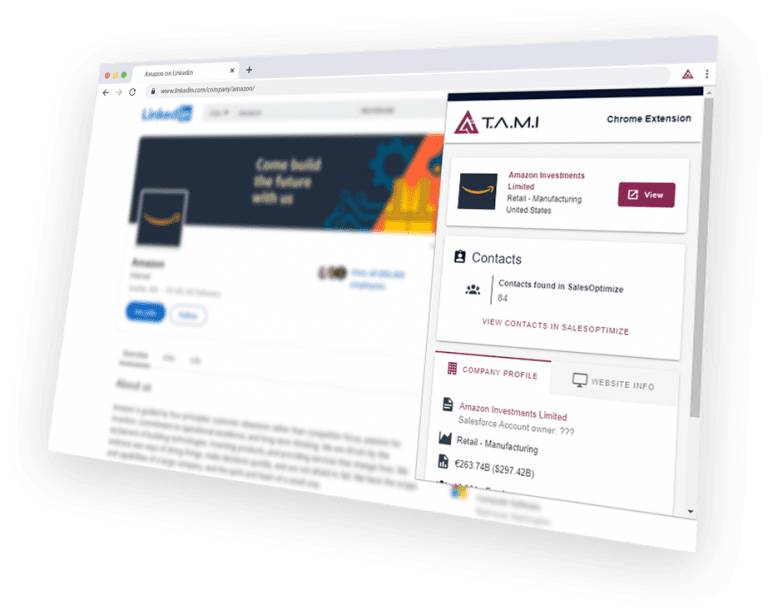
Pull verified contacts, tech stack, payment providers and merchant data from any company site or social profile while you're already looking at it. Export straight to your CRM.
- Website
- Facebook
- Twitter
Tell us which platform and payment provider you target and we'll tell you how many UK merchants match, with contacts.
Explore more industries
Every industry runs on the same UK dataset. Pick the market you sell into.
Frequently asked
questions
Get the retail leads your reps can actually pitch
Filter UK retailers by channel, scale and systems in use, confirm they are trading, and take the contacts with you.