
Customer and competitor analysis that names the accounts, not just the trends
Most customer and competitor analysis ends in a positioning slide. TAMI AI ends it with a list: every company running your competitor's product, what else is in their stack, and who to call inside them.
We read live company websites and detect the platforms, payment providers, carriers and tools each business runs. That turns any competitor into a customer list you can size, segment and work, with verified contacts attached.
1.6m UK companies. Every vendor detected, per site, refreshed continuously.
No card needed. Pick a competitor and see how many of their customers we find.
Market share tells you that you lost. Not to whom.
Reported share comes from vendors describing themselves. Detected share comes from reading which companies actually run which product. One is a percentage. The other is a list of accounts with renewal dates.
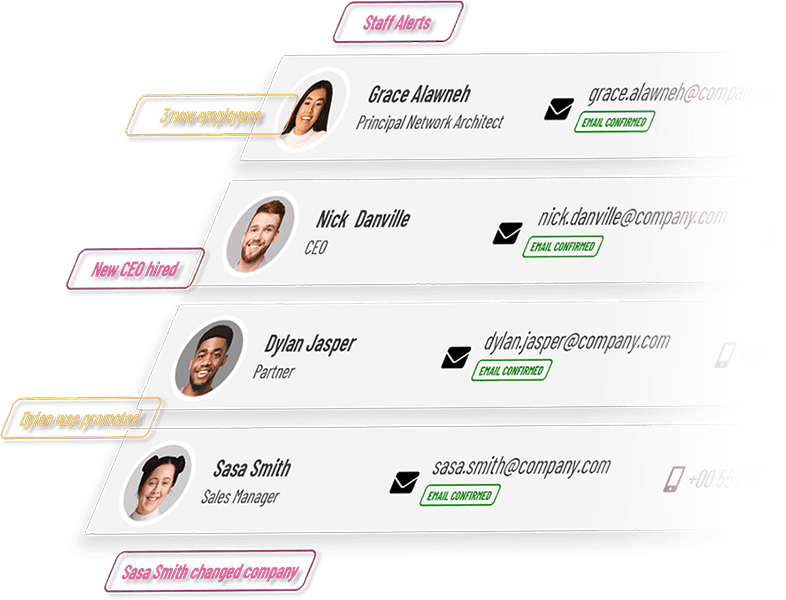
What is customer and competitor analysis?
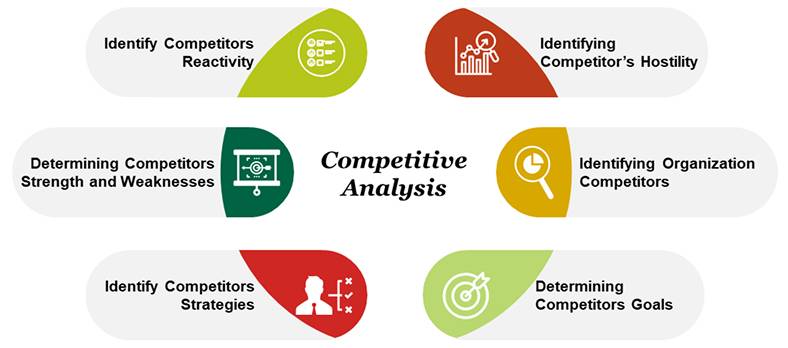
Customer and competitor analysis is the practice of understanding who buys in your category, who they currently buy from, and what separates the accounts you win from the ones you lose. It covers your own customer base, your competitors' customer bases, and the overlap between them.
Most versions of it stop at the strategic layer: market share estimates, feature grids, positioning maps. Useful for a board deck, but useless on a Tuesday morning. The version that changes revenue is account-level. It names the companies, shows what each one runs, and identifies which of them look most like the customers you already win.
Why competitor analysis rarely reaches the sales team
Three failures, all producing the same outcome: a document nobody opens twice.
It was built on inflated data
Case studies, logo walls, and press releases show the customers a competitor wants you to see. TAMI AI detects vendors from live websites, so you see the whole installed base, including the mid-market accounts nobody writes a case study about.
It only described the market
A share percentage tells you where you stand. It doesn't tell your reps who to call on Monday. TAMI AI returns the companies behind the percentage, so analysis and target list are the same artefact.
It was just a snapshot
Vendor changes happen on renewal dates and re-platforms, and they're only useful if you catch them early. TAMI AI refreshes continuously, so a competitor losing an account shows up as movement rather than as something you learn about a year later.
Turn a competitor into a working list.
Every company running their product, what else they run, who to call, and what changed since last quarter.
THEIR CUSTOMERS ALREADY BUY WHAT YOU SELL
No category education, no budget to create, no convincing anyone the problem exists.
Cold prospects need convincing the problem exists. A competitor's customer ran procurement, signed off budget and lived with the compromises. All that remains is whether they would choose again.
Pick a competitor and see how many of their UK customers we can name. The count is free.
WHAT OUR CLIENTS THINK OF TAMI AI





Which competitors can you map with TAMI AI?
Here are the top vertical patterns our customers run, and what the detection reveals in each.
-
Payments and fintech
Every merchant running a rival processor, plus BNPL and checkout stack.
Explore payments → -
Ecommerce
Platform install bases by revenue band, with migration direction over time.
Explore eCommerce → -
SaaS and tech
Who runs your competitor's tool, and what it sits alongside.
Explore SaaS → -
Logistics
Carrier relationships by shipper, corridor and cross-border volume.
Explore logistics → -
Manufacturing
ERP, trade portal and ordering systems, showing who is mid-modernisation.
Explore manufacturing → -
Retail
Checkout, loyalty and multi-currency stacks across international sellers.
Explore retail →
Our European patent for merchant detection is what makes the payment, checkout and carrier mapping possible. One logistics client used competitor and cross-border targeting to generate $35m in opportunities within eight weeks. You can too.
Three questions your CRM can't answer
One
Which companies switched away from us in the last year, and which competitor took them?
Two
Of our competitor's UK customers, which ones most resemble the accounts we win and keep?
Three
Where does a competitor own the market outright, and where are they thin enough to attack?
Not a slide deck. A list with names on it.
Every answer comes back as a count, a segmentation and a company list with verified contacts, ready for sales without a second procurement round.
What you can detect with TAMI AI
Customer and competitor analysis is only as good as what you can see inside a company. Here's what we read from a live site.
Vendor and platform detection
Which ecommerce, martech, hosting and analytics products a company actually runs.
Payment and checkout stack
Processors, payment methods, currencies and BNPL, at merchant level.
Shipping and carrier relationships
Who fulfils for whom, by carrier and destination corridor.
Stack context
What a competitor's product sits alongside, so you know what you'd integrate with or replace.
Switching movement
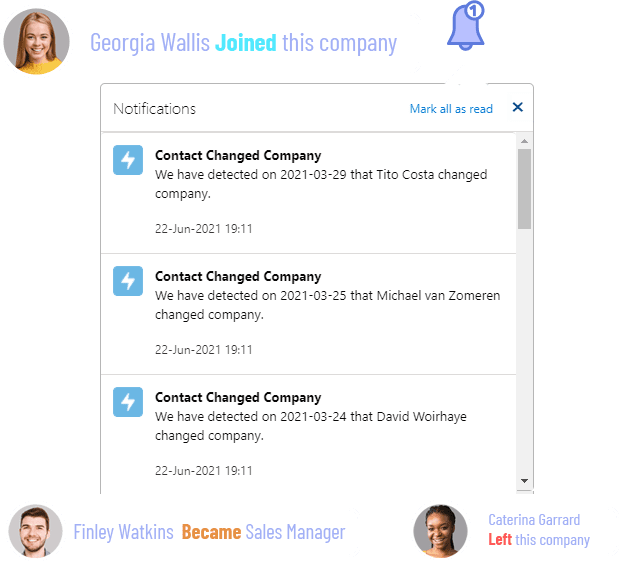
Migrations, new installs and removals, showing which accounts are in play now.
Lookalike modelling
Upload your best customers and find the competitor accounts that share their traits.
Combine any of them.
Find every UK merchant over £5m running a rival checkout that shipped cross-border last quarter, then open the list. There's no limits to what you'll find.
WE DETECT THE VENDOR. WE DON'T ASK AROUND
With TAMI AI, a competitor's customer base is read from live websites rather than assembled from case studies, review sites or survey panels. That decides whether a quiet mid-market account appears in your list at all, and it's why our maps hold up when clients check them against the deals they've personally lost.

458M+
CONTACTS


REAL TIME
REFRESH


What comes back when you map a competitor with TAMI AI
We don't give you a positioning matrix. Six things land in your hands, and every one of them is usable the same day.
- The customer list Every company detected running their product, exportable.
- Segment breakdown Region, size band, revenue band and vertical, so you see where they're strong and where they aren't.
- Full stack per account What else each company runs, which is the opening line of your outreach.
- Lookalike ranking Those accounts sorted by how closely they resemble your own best customers.
- Named decision-makers Verified contacts inside those companies, for when analysis turns into a campaign.
- Change tracking Installs and removals since last quarter, so switching windows surface early.
Where does TAMI's market intelligence data come from?
From the open web, read directly. We don't resell databases or buy panel data. We crawl live websites, detect the products, providers and payment infrastructure each business runs, then match those companies to verified contacts. All UK and EU data carries documented lawful basis and managed suppression.
How TAMI AI compares on competitor customer data
Two platforms UK teams evaluate alongside us, and what each does best.
| HG Insights | Wappalyzer | TAMI AI | |
|---|---|---|---|
| Companies covered | 13.2m | Not published | 71m company records |
| Technologies tracked | 20,000+ products | 8,077 | Full stack plus commercial signals |
| Detection method | Documents, filings, job posts | Front-end signals | Live site crawling plus AI classification |
| Payments and BNPL detection | No | Yes | Patented |
| Merchant verification | No | No | Yes |
| Shipping and carrier data | No | Partial | Yes |
| Lookalike modelling | Limited | No | Yes |
| Verified contacts included | Add-on | Limited | Yes |
| Free access to test | No | Free extension | Yes |
How to run a competitor customer analysis, in six steps
Pick the competitor, not the category
Map one rival at a time. A category-wide view blurs the differences that decide which accounts are winnable.
Detect, don't infer
Build the list from what's running on live sites. Case studies and logo walls show a curated fraction of the truth.
Segment their base before you attack it
Split by size, region and vertical. Every competitor is dominant somewhere and thin somewhere else, and only one of those is worth your quarter.
Score against your own winners
Rank their customers by resemblance to the accounts you win and keep. Fit beats volume, every time.
Look for movement, not just presence
Recent installs, removals and re-platforms show which accounts are already reconsidering. Those are the conversations that convert.
Hand over names, not conclusions
The output should be a contactable list. Anything that stops at a percentage stops before the useful part.
A competitor map is only as good as its detection. Source, depth and refresh cycle decide whether you end up with a working target list or another slide nobody opens.
WHAT TEAMS DO WITH IT
 Build a switch list from a competitor's install base
- Open with what a prospect already runs
- Catch re-platforms while the decision is still open
- Prioritise accounts that resemble your best customers
- Track where you're losing and to whom
- Measure installed-base share instead of reported share
- Find the segments a competitor doesn't cover
- Watch adoption shift quarter on quarter
- Test positioning against real stack data
- Size a displacement opportunity before funding it
Most teams find out they lost an account at renewal. See the switch before it happens.
THE PATTERN IS ALREADY IN YOUR CUSTOMER LIST
Customer analysis comes first. It defines what a good competitor account actually looks like.
- Upload your closed-won accounts and TAMI AI finds what they share: technology stack, payment provider, size band, region and trading behaviour.
- That profile then ranks every competitor customer we detect, so the list arrives sorted by fit. Stripe, USPS, Trustpilot and DHL use TAMI AI this way.
NO CUSTOM DEVS. JUST PLUG IN
With TAMI AI, building a verified UK contact list takes minutes. Setup is instant. Data starts flowing straight away. Here's what TAMI AI integrates with:





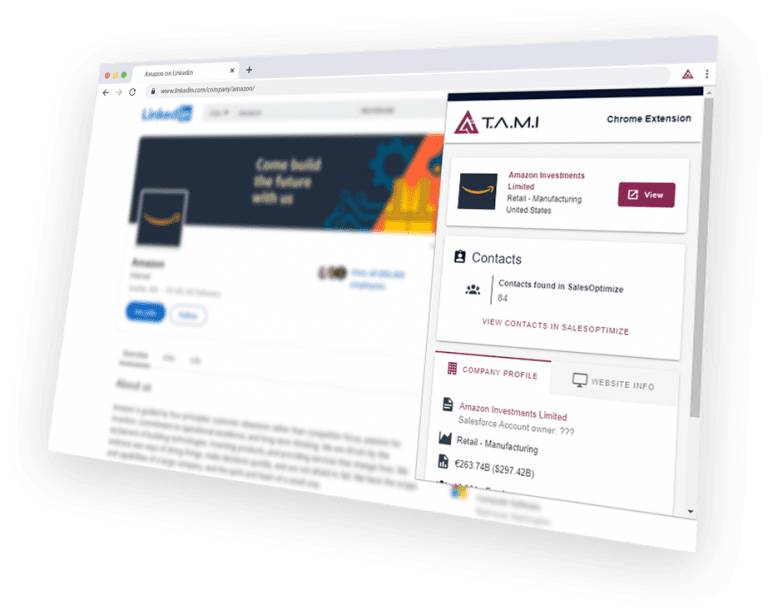
QUALIFY A COMPANY WITHOUT LEAVING THE TAB
Pull verified contacts, tech stack, payment providers and merchant data from any company site or social profile while you're already looking at it. Export straight to your CRM.
- Website
- Facebook
- Twitter
Send us your segment definition and we'll tell you how many UK companies match it, and how many are showing activity this month.
Explore more solutions
Every solution runs on the same UK dataset. Pick the problem you're solving today.
Frequently asked
questions
Stop guessing who they sell to
Pick a competitor, see the companies running their product, and take the list with you.