
Ideal customer profiling with clear B2B audience data
Most customer profiling produces a slide describing a company that does not exist. TAMI AI builds the profile from the reliable B2B audience data, then tells you how many businesses match it and who to contact inside them.
Upload your closed-won accounts and our lookalike modelling finds what they genuinely share, including the technology they run, the payment providers they use, their size band and their region. The output is a filter, not a fictional buyer.
1.6m UK companies to match against. Every attribute countable.
No card needed. Upload ten accounts and see what they have in common.
If you cannot count it, it is not an ICP.
An ICP of mid-market UK SaaS companies with a growth mindset cannot be counted, exported or tested. Narrow it to UK Shopify merchants over £5m running Klarna and you get a number, a list and the contacts inside it.
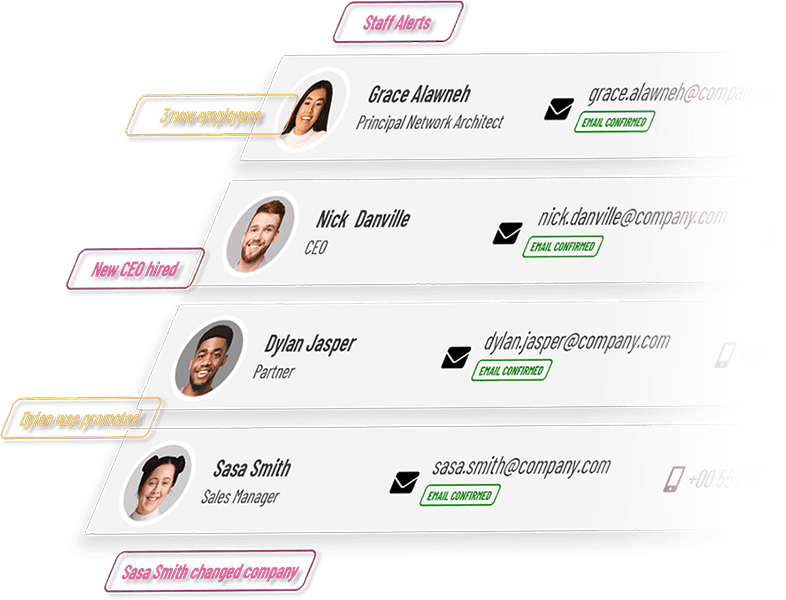
What is customer profiling?
Customer profiling in B2B means describing the companies most likely to buy from you, precisely enough that someone else could act on it. It covers firmographics such as size and location, technographics such as the platforms a business runs, and behavioural attributes such as how it trades.
The test is whether the profile is countable. A workshop reflects who the room believes the customer is. ICP data built from closed-won accounts reflects who actually bought, and produces a filter your team can run, count and export the same afternoon.
Why most ICPs never leave the slide deck
There are common failures with ICP data, and all three end with the sales team ignoring the profile.
It was opinion
Workshop ICPs record what the room believes. The accounts you actually won often share traits nobody listed, and exclude segments everyone assumed were core.
Attributes you can't filter
Ambition, culture fit and growth mindset cannot be applied to a database. If an attribute cannot become a filter, it cannot become a list.
Written once, never tested
Markets move and so does product fit. An ICP data set at the start of a financial year describes the customers you won before it, not the ones available now.
Build the profile from reliable B2B audience data.
Build the profile from reliable B2B audience data in attributes you can filter, then recount it each quarter. That is the difference between a document and a definition.
YOUR BEST CUSTOMERS ALREADY WROTE YOUR ICP
The pattern is sitting in your closed-won list. Most teams have never run it.
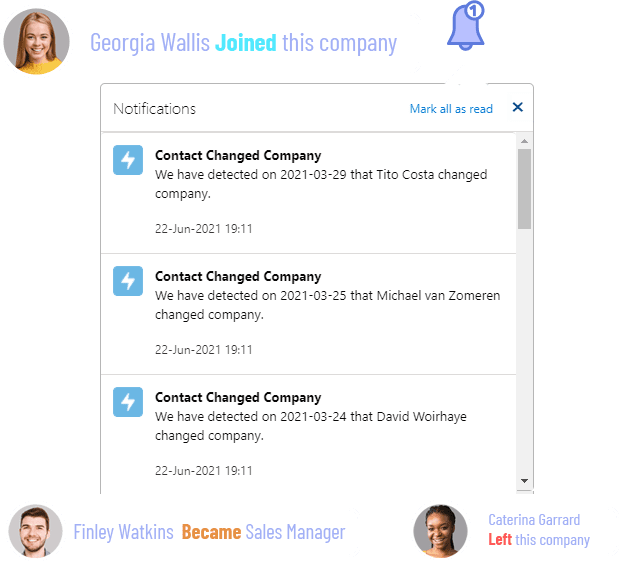
Best accounts often cluster on a payment provider, a platform or a shipping corridor rather than the sector everyone assumed. Those are attributes you can filter a market by.
Upload ten closed-won accounts and see the profile they produce. Free.
WHAT OUR CLIENTS THINK OF TAMI AI





Which attributes define an ICP in your market?
Here are the top verticals our customers profile in, and the attributes that actually separate good accounts from bad ones.
-
Payments and fintech
Processor, payment methods and BNPL adoption per merchant.
Explore payments → -
eCommerce
Platform, revenue band and genuine trading status.
Explore eCommerce → -
SaaS and tech
The stack a company runs, including the tools you integrate with.
Explore SaaS → -
Logistics
Carrier relationships and cross-border corridors served.
Explore logistics → -
Manufacturing
Digital maturity, from trade portals to ERP adoption.
Explore manufacturing → -
Retail
Multi-site footprint, currencies accepted and international reach.
Explore retail →
Our European patent for merchant detection makes payment, checkout and carrier attributes available as ICP data. On one UK martech engagement, targeting built this way converted around ten times better than lists from ZoomInfo and Cognism.
Three questions a real ICP has to answer
One
How many UK companies match this definition, exactly?
Two
Which attributes do our best accounts share that our ICP document never mentioned?
Three
If we ran this profile again next quarter, what would have changed?
Not a persona. A filter that returns a list.
Every answer comes back as a count, a segmentation and an exportable company list with verified contacts attached.
What you can build an ICP on
Sector and headcount describe a company's paperwork. These describe how it operates.
Technology stack
Ecommerce platform, martech, hosting, analytics and banking provider.
Payments and checkout
Processor, payment methods, currencies and BNPL adoption.
Merchant status
Genuine trading businesses, verified rather than assumed.
Cross-border activity
Carriers used and destination markets served.
Growth signals
Hiring, expansion and platform change, so fit reflects direction as well as position.
Firmographics
Region, city, headcount band and revenue band across all four UK nations.
Combine any of them.
This is what usable B2B audience data looks like: every attribute is a filter, so the profile you define is the list you export.
WE DERIVE THE PROFILE. WE DON'T ASK YOU TO GUESS IT
Most tools ask you to describe your ideal customer and then find matches. That inherits every assumption in the description. TAMI AI works the other way round, reading your closed-won accounts to find the attributes they genuinely share, then applying those across 1.6 million UK companies.

458M+
CONTACTS


REAL TIME
REFRESH


What comes back when you use TAMI for ICP data
Not a persona with a stock photograph. Six things, all usable the same day.
- The derived profile The attributes your won accounts actually share, ranked by how strongly.
- A countable definition How many UK companies match, updating live as you adjust criteria.
- The matching list Every company that fits, exportable with contacts attached.
- Fit ranking Matches sorted by closeness rather than alphabetically.
- Segment breakdown How the matching market splits by region, size and sector.
- A saved definition Criteria you rerun next quarter to see how the profile has moved.
Where does TAMI's ICP data come from?
From the open web, read directly. We don't resell databases or buy panel data. Company attributes are read from live websites and classified with AI, then matched to verified contacts. All UK and EU data carries documented lawful basis and managed suppression.
How TAMI AI compares on ICP data
Two platforms UK teams evaluate alongside us, and what each does best.
| Keyplay | 6sense | TAMI AI | |
|---|---|---|---|
| Derives ICP from won accounts | Yes | Yes | Yes |
| Verified contacts included | No | Credit-based | Yes |
| Technology stack attributes | Yes | Yes | Yes |
| Payments and BNPL attributes | No | No | Patented |
| Shipping and carrier attributes | No | No | Yes |
| Trading status verification | No | No | Yes |
| UK company depth published | No | No | 1.6m |
| Commitment required | Annual | Annual or multi-year | None |
| Free tier to test | 25-account preview | 50 credits monthly | Yes |
How to build an ideal customer profile, in six steps
Start from closed-won, not from opinion
Take your best thirty accounts by revenue, retention and speed to close. Upload them to TAMI AI and the shared attributes come back ranked, including ones nobody would have nominated in a workshop.
Separate correlation from cause
Some shared traits are meaningful and some are accidents of where you sold first. Because the attributes are ranked by strength rather than listed flat, the ones doing real work are easier to spot.
Test every attribute as a filter
If it cannot be applied to a database, it cannot be applied to a market. Culture and ambition fail this test. Platform, processor, carrier, size and region are all live filters in TAMI AI.
Count the match
Run the definition and watch the count update as you adjust it. Too few and the profile is overfitted to your existing base. Too many and it is not a profile, it is a market.
Attach the contacts
A profile that stops at company level leaves the work half done. TAMI AI returns verified decision-makers inside every matching account, so the definition arrives as a working list rather than a filter.
Rerun it quarterly
Save the criteria in TAMI AI and recount next quarter. Watching which attributes strengthen and which fade is how an ICP stays current rather than becoming an artefact nobody trusts.
An ICP is a filter, not a story. If your team cannot run it, count it and export it, it is a description of a customer rather than a definition of one.
WHAT TEAMS DO WITH OUR B2B AUDIENCE DATA
 Work accounts ranked by genuine fit
- Disqualify faster on attributes that matter
- Find companies resembling your best customers
- Prioritise the segment with highest win rates
- Open with something specific to the business
- Build audiences from the profile, not from a persona
- Size a segment before committing budget
- Test whether a new vertical actually fits
- Feed the definition into campaign targeting
- Recount the market each quarter
A sharper profile beats a bigger list every quarter. Upload thirty accounts and see what yours produces.
TURN THIRTY ACCOUNTS INTO THREE HUNDRED
A profile is only useful if it finds companies you have not already found.
- Lookalike modelling applies your derived attributes across the market and returns every business that matches, ranked by closeness. That output is your B2B audience data for every channel.
- Stripe, United States Postal Service, Trustpilot and DHL use TAMI AI to find more companies like their best ones.
NO CUSTOM DEVS. JUST PLUG IN
With TAMI AI, building a verified UK contact list takes minutes. Setup is instant. Data starts flowing straight away. Here's what TAMI AI integrates with:





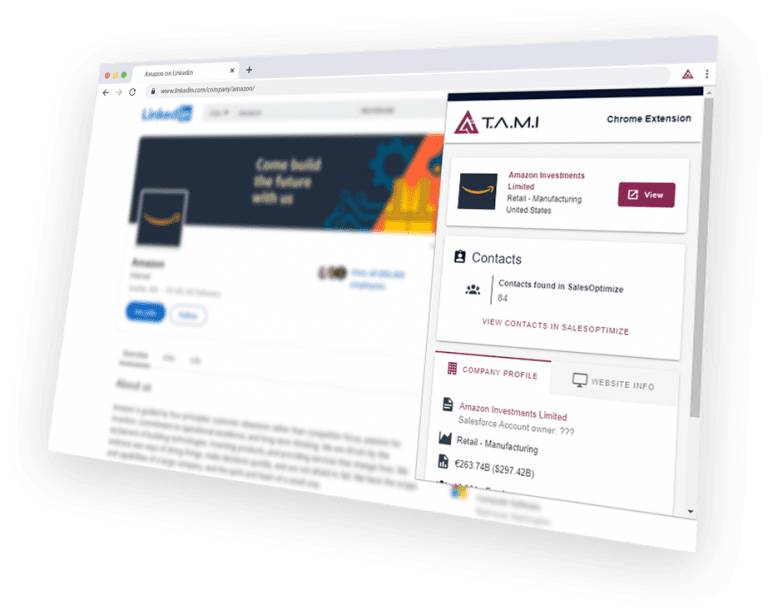
QUALIFY A COMPANY WITHOUT LEAVING THE TAB
Pull verified contacts, tech stack, payment providers and merchant data from any company site or social profile while you're already looking at it. Export straight to your CRM.
- Website
- Facebook
- Twitter
Send us your segment definition and we'll tell you how many UK companies match it, and how many are showing activity this month.
Explore more solutions
Every solution runs on the same UK dataset. Pick the problem you're solving today.
Frequently asked
questions
Stop describing your ideal customer. Start counting them.
Upload your closed-won accounts, see what they share, and find every UK company that matches.